

CREATIVE MOLDING TECHNIQUE | Simon Zsolt József
27-28-29-30 June 2025
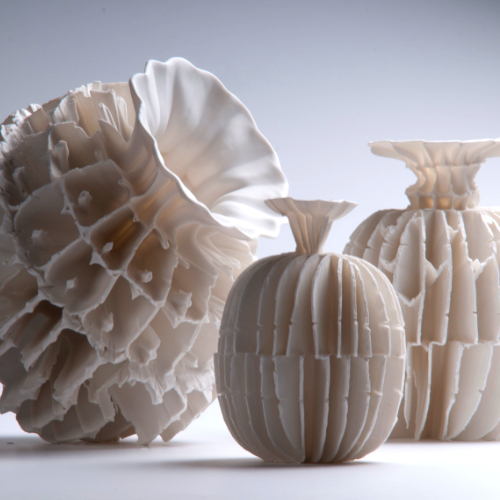
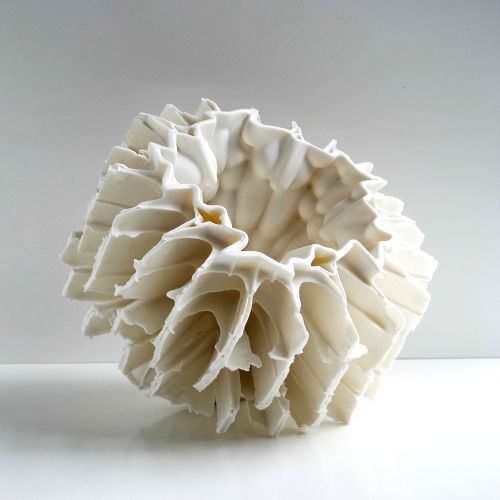
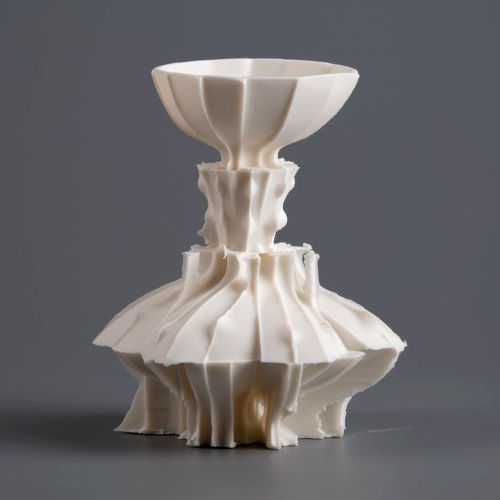
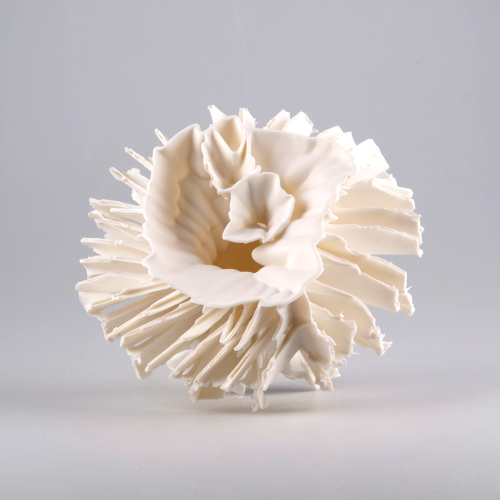
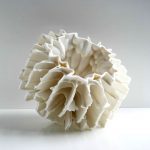
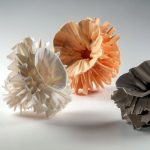
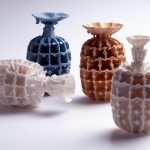
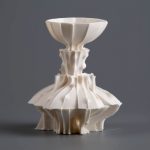
The aim of the course is to understand the opportunities to model the forms inherent in molding errors. We will learn how to prepare a multi-part plaster molding form, which allows us to model the internal and external shapes of the final object.
The artist will make a presentation of his works, which will allow to observe and understand this special molding procedure. The second half of the screening will demonstrate the creation of a specific object from the beginning to the final stage.
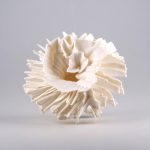
Participants will start working on one of Zsolt’s floral objects, through an individual consultation, and later, they will create a different shape, allowing learning from each other’s work. From the preparation of the plaster, the finishing, sawing, sanding and assembly of the plaster form will follow until the porcelain casting.
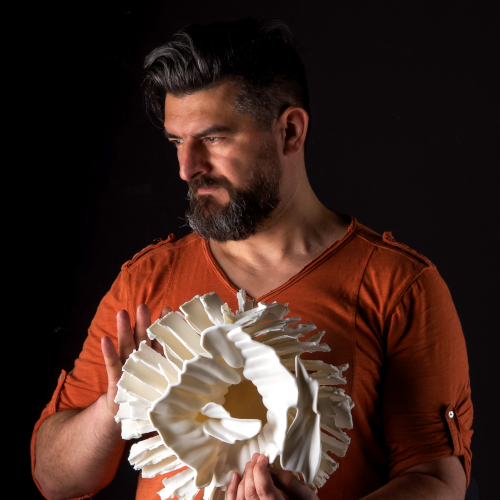
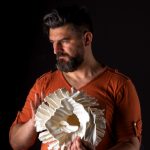
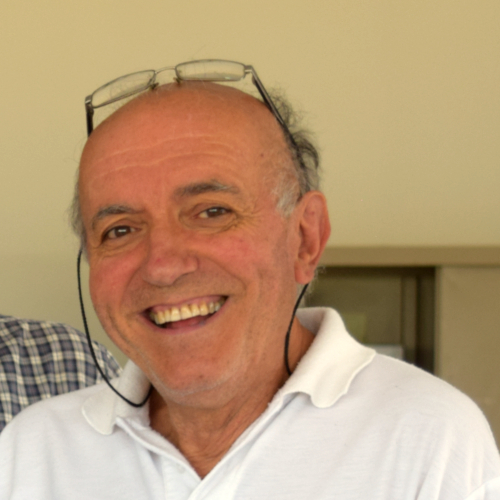
Simon Zsolt József
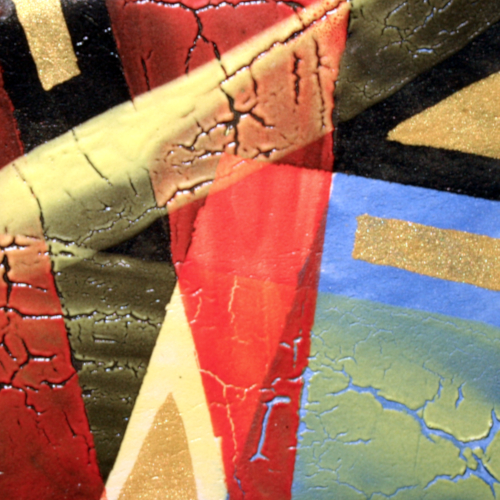
Simon Zsolt József studied at the Moholy-Nagy University of Art and Design, Budapest. He is an all-round artist, interested in ceramics, painting, theater and music. The study of movement is the basis of his work. His particular research is concentrated in the process through the molds or modules that give birth to a particular shape, not the programmed one. It uses porcelain for its quality of fragility which grants a sense of lightness, movement and refinement.
The 20-hour workshop lasts from 9.00 to 17.00 on friday and saturday, from 9.00 to 16.00 on sunday and from 9.00 to 12.00 on monday.
Included in the Workshop cost:
23 hours of teaching | all the necessary materials | firings | nr. 3 brunch lunch | a box with the samples of the materials used during the workshop
Teacher: Simon Zsolt József
Translator and assistant: Included
Languages: English and Italian
Download the full program in pdf
To confirm your inscription you have to make a bank transfer of a deposit or the total amount.
Richiesta informazioni
Related products
LA SINTERRACOTTA | Giovanni Cimatti
Monocottura con gres a partire da 1050 gradi
Una buona ceramica si distingue non solo per come è rivestita e la sua intrinseca arte ma sopratutto per il suo corpo che è forte e compatto quando è realizzata in gres. Oggi è possibile utilizzare un innovativo gres bianco, anche senza raggiungere la faticosa e costosa alta temperatura, ed avere la sinterizzazione di questa argilla in tutti i tipi di forni per ceramica.
Durante il corso faremo anche esperienza di come sia possibile ridurre ulteriormente i costi facendo una cottura unica di argilla e smalti che viene infatti definita monocottura. Useremo un'argilla plastica che rende facile modellare qualsiasi tipo di forma e particolari medium per l'applicazione a pennello di rivestimenti che saranno campiti anche con l'impiego di maschere adesive. Sara possibile infine anche applicare, in seconda cottura a 900 gradi, un simpatico e innovativo smalto oro.
Il corso di 14 ore inizia alle ore 9.00 e termina alle ore 17:00 del sabato e inizia alle ore 9:00 e termina alle ore 16.00 della domenica.
Compreso nel corso:14 ore di docenza | i materiali necessari allo svolgimento del corso | le cotture | nr. 2 pasti brunch (colazione e pranzo) | una scatola omaggio (con campionatura dei materiali utilizzati durante il corso)
Docente: Giovanni Cimatti Scarica il programma in formato pdfTo confirm your inscription you have to make a bank transfer of a deposit or the total amount.
Extraordinary japanese constructions with Kazuko Uga
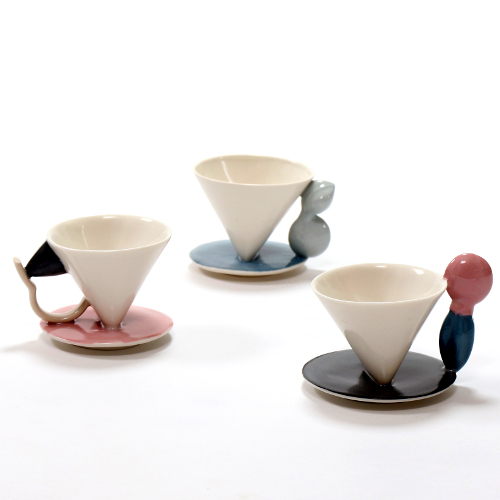
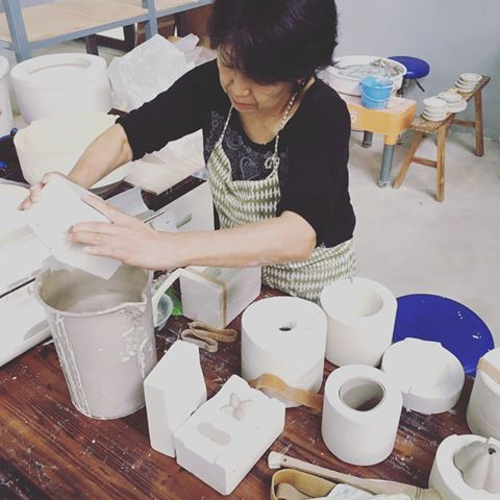
A complex and fascinating technique focused on the personal artistic work of Kazuko Uga. The construction of the liquid porcelain will allow us to develop contemporary projects of great beauty, refinement and lightness. Course of construction of objects with the use of white and pigmented liquid porcelain. Course of construction of objects with the use of slip porcelain and treatment of surfaces in the Japanese style. Preparation of porcelain, recipes. Drying, firing, glazing, corrections of cracks and deformations.
The artist will be on show in Faenza from the 9th to the 21st of October as part of the "Japanese October" Festival.
PROGRAM: Fully practical lessons with a theoretical chapter dedicated to the preparation of slip withe and coloured porcelain. First day: Preparation of liquid porcelain, precautions. Preparation of liquid coloured porcelain, recipes and percentages. Methods of slip casting porcelain. Construction with the small parts, finishing, drying. Firing, kiln management for high temperature. Second day: Finishing and cleaning pieces, tricks and corrections. Evaluation of results. Design of new pieces for both sculpture and use. Video-projection of the artist's works.The 14-hours workshop lasts from 9.00 to 17.00 on Wednesday and from 9.00 to 16.00 on Thursday.
Teacher: Kazuko Uga Translator and assistant: Martha Pachon Languages: English, Italian, French, Spanish, Japanese Download the Kazuko Uga CV Download the application form in pdf Download the full program in pdf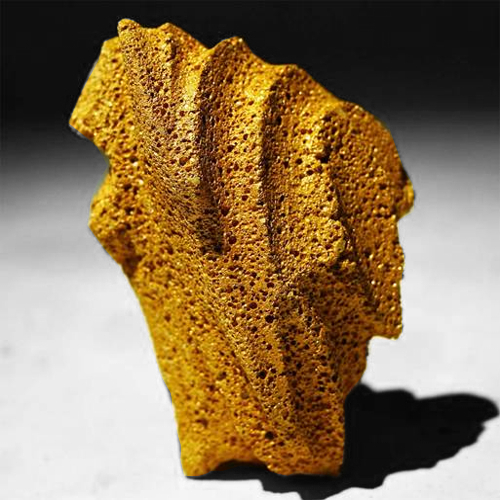

Thousand bubbles
Una delle premesse in campo ceramico, fondamento della didattica e della tecnologia stabilisce che non vi devono essere bolle di aria negli impasti ceramici ma...
E' anche vero che la presenza di bolle e la stessa porosità delle argille favorisce l'isolamento termico, l'essiccazione e la leggerezza. Con impasti a struttura spugnosa si ottengono forme facilmente lavorabili a secco/crudo per mezzo del taglio, incisione o abrasione, una lavorabilità a biscotto simile a quella dell'osso di seppia, durezza inaspettata dopo la cottura finale e il peso vicino a quello dei poliuretani espansi.
Da questa scelta parte la possibilità di creare forme legate in particolare al campo della scultura dove i problemi dello svuotamento delle forme viene superato velocizzando le cotture. Infine e in relazione alla dimensione delle microbolle inserite sarà possibile anche l'applicazione di patine, ingobbi e rivestimenti anche vetrosi.
Programma: metodi di realizzazione di schiume e la loro introduzione nelle argille - colatura della schiuma argillosa - essiccamento - scultura a secco crudo per taglio/incisione - cottura ad alta temperatura in forno elettrico - sfornata - applicazione di rivestimento tipo smalto oro - cottura a media temperatura - lezioni di tecnologia ceramica. Per motivi di tempo e aumentare l'esperienza sulla tecnica saranno forniti ai partecipanti anche alcuni blocchetti di argilla porosa già essiccati.
Il corso di 14 ore dura dalle ore 9.00 alle ore 17:00 del sabato e dalle ore 9:00 alle ore 16.00 della domenica. Docente: Maestro Giovanni Cimatti Scarica il modulo di iscrizione in formato pdf Scarica il volantino in formato pdf
Ceramic maze: the clays
la scelta, le superfici e la cottura delle terre
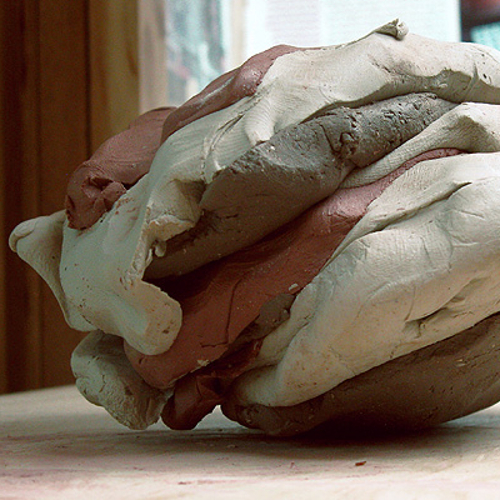
Fare ceramica è una delle arti più affascinanti, ma occorre avere ben chiare alcune regole e metodologie perchè l’autodidattica è un approccio possibile, ma si può perdere tempo e danaro.
La scelta del tipo di argilla da impiegare nella produzione delle forme è di basilareimportanza e da questa dipendono tutte le altre come la foggiatura, gli smalti e la temperatura ottimale di cottura. Si può scegliere a monte quale metodologia impiegare, ma questo non toglie che la conoscenza delle argille e quindi il loro carattere è assolutamente fondamentale.
Durante il corso avrete l’opportunità di toccare una vasta gamma di argille da cui poter far discendere le vostre scelte future. Il corso si limita quindi alla produzione in libertà di esperienze costruttive, tattili e di cottura sempre sotto la guida del docente.
PROGRAMMA: esercizi personali con vari tipi di argilla con e senza inerti sia per bassa che alta temperatura a colombino, lastra e a stampo – finiture possibili durante le varie fasi di asciugatura – ritiri e plasticità – la deformazione delle forme e il suo controllo – Cottura di alcune esperienze a bassa ad alta temperatura. Lezioni di tecnologia ceramica -dimostrazione di foggiatura a colaggio.
Le forme saranno realizzate seguendo le indicazioni del docente, saranno cotte e consegnate entro i tempi del corso stesso. Il corso di 14 ore inizia alle ore 9.00 del sabato e termina alle ore 16.00 della domenica. Docente: Maestro Giovanni Cimatti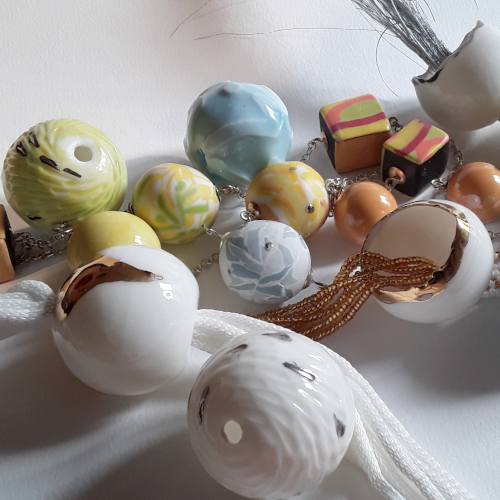
THE PEARL, FROM THE BEGINNING TO THE END | Martha Pachon
A complex and complete course to make the artist independent of creating large and small series of pearls for jewelery in various shapes, sizes and decorations. Making of molds, testing of slip and body porcelain, firing and decoration. The italian mold expert Florio Bedeschi, will be in charge of the first part of the course for the execution of complex but practical molds for pearls of different shapes and sizes.
A second part related to the use of the mold with the slip and body porcelain, how to firing and diferent kinds of decoration, will be with Martha Pachón Rodríguez.
The 20-hour workshop lasts from 9.00 to 17.00 on Friday and Saturday and from 9.00 to 16.00 on Sunday.
Included in the Workshop cost: 20 hours of teaching | all the necessary materials | firings | nr. 3 brunch lunch | a box with the samples of the materials used during the workshopTeachers: Martha Pachon and Florio Bedeschi Languages: English, Italian, French, Spanish
Download the full program in pdf
To confirm your inscription you have to make a bank transfer of a deposit or the total amount.
Volcanic landscapes with Rafa Peréz
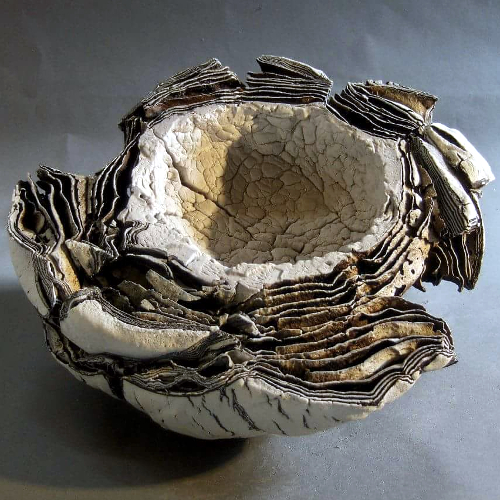
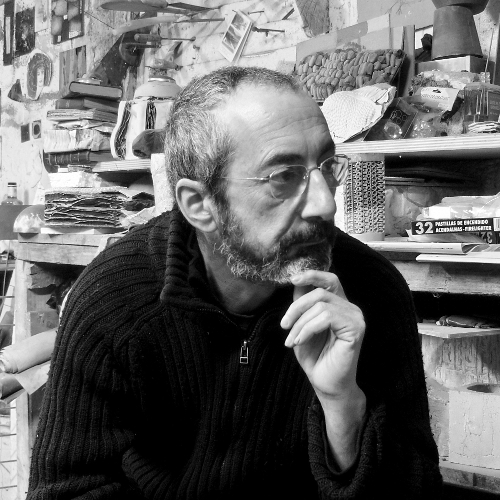
The use of shoot high temperatures with conventional clays in contrast with porcelain, surprising effects for results between the predictable and the unpredictable. Rafa Pérez introduces us to his methods that have made him famous in the field of contemporary ceramic sculpture.
PROGRAM: - Fully practical lessons. - Use of different techniques to obtain a wide range of results. - Use of blocks with different types of clays at the same time. - Alternative chemical treatments to the techniques. - Production of pieces, firing, evaluation and reproduction of new pieces. The 20-hour workshop lasts from 9.00 to 17.00 on Tuesday and Wednesday and from 9.00 to 16.00 on Thursday. Teacher: Rafa Pérez Translator and Assistant: Martha Pachon Languages: English, Italian, French, Spanish Download the application form in pdf Download the full program in pdf
Translucent porcelain
Immediate transparency workshop, slip porcelain without usa of mold and in a single-firing
Transparency is one of the most important qualities of porcelain and usually, requires a prolonged, precise and very accurate processing to obtain a fine beauty piece highlighted by the translucenty. This course allows you to develop two simple and immediate techniques that will facilitate and strengthen creativity to develop many projects without the use of large resources and experience in the field of porcelain techniques. We will use slip porcelain without the use of molds and with a single-firing.
PROGRAM: Totally practical lessons, preparation of the material and basic forms. Use of slip porcelain and construction with two totally different techniques. Surface treatment, controlled drying and finishing. Methods to avoid deformation and breakage during the process and all the special features of the specific firing for this technique. Recover broken complex variations of the techniques and the surface with the use of color introduced into the slip the porcelain. Production of pieces to project in small series for use or decoration. pieces or cracks with specific recipe. Finally, more co. The 14-hour workshop lasts from 9.00 to 17.00 on Saturday and from 9.00 to 16.00 on Sunday. Teacher: Martha Pachon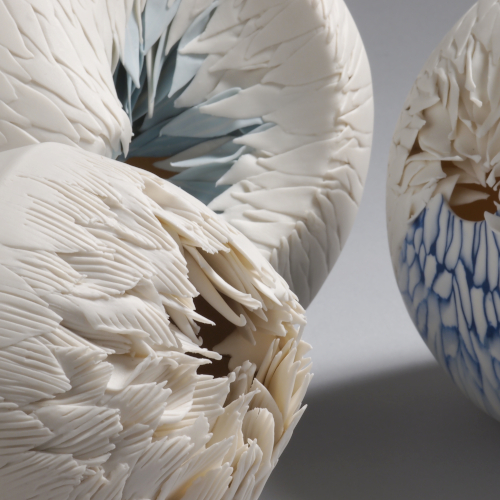
DYNAMIC PORCELAIN | Martha Pachon
Multitechnic Course of Body and Slip Porcelain
Inspired by the new developments of contemporary ceramics, both utilitarian and decorative, sculptural or any application that can be made of this precious material, this course is structured as a laboratory of "multiprocesses" to know and master the basic techniques of slip and body porcelain. Understanding porcelain in a practical, direct, easy and fast way will be the goal of this course. Participants will have at their disposal different techniques, some simple and other complex, with and without the use of molds, with the possibility of glazing also in single firing, with theoretical chapter dedicated in detail to all the questions regarding porcelain: drying, breakage, deformation, firing curves, etc.
THE PARTICIPANTS, BEYOND TO BRING HIS FINISHED WORKS TO HOME, WILL HAVE THE RIGHT KNOWLEDGE OF ALL THE RESOURCES IN THE FIELD OF THE PORCELAIN: ITS QUALITY OF TRANSPARENCY, RESISTANCE, REFINEMENT AND WITHOUT GOING CRAZY!The 20-hour workshop lasts from 9.00 to 17.00 on Friday and Saturday and from 9.00 to 16.00 on Sunday.
Included in the Workshop cost: 20 hours of teaching | all the necessary materials | firings | nr. 3 brunch lunch | a box with the samples of the materials used during the workshopTeacher: Martha Pachon Languages: English, Italian, French, Spanish
Download the full program in pdf
To confirm your inscription you have to make a bank transfer of a deposit or the total amount.