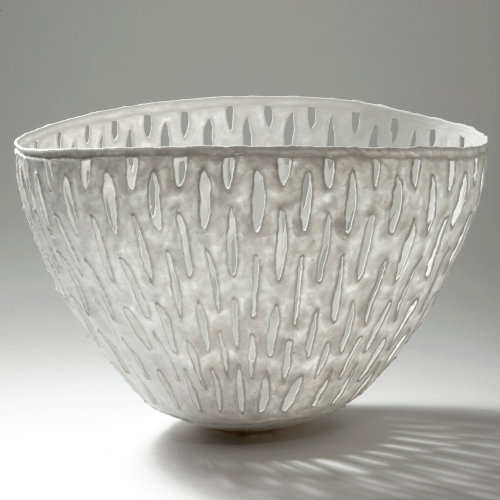


PATTERN AND TRANSPARENCY | Guy Van Leemput
24-25-26 April 2026
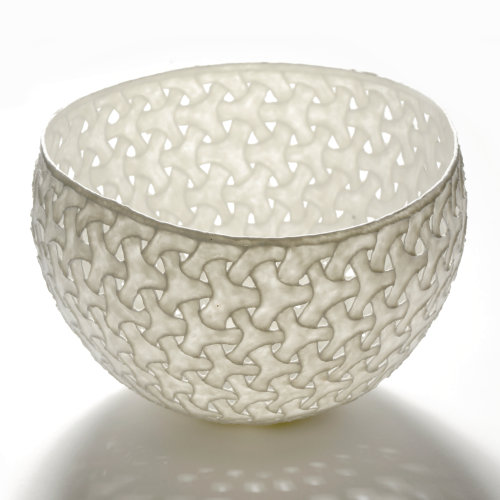
Course on very thin and transparent porcelain.
This workshop is an introduction to making wafer-thin bowls with flax reïnforced porcelain on an inflated balloon, as well as discovering how to make a shrinking support on which the wafer-thin bowl can be hung upside down in the kiln. The first day you will start by getting to know this wonderful clay. Guy Van Leemput will teach techniques for applying patterns with the opportunity to practice yourself. Each participant will start a bowl with one of the demonstrated techniques. We will also make the swinging supports that will carry the piece in the kiln. After this first ‘maiden-bowl’ is finished you will be challenged to push your limits further with a second bowl on day 2. New ‘advanced’ techniques will be shown, for which we will use a mini clay press. The bowls made will be fired on the spot and can be taken home on day 3.
The lessons are totally practical in addition to a theoretical chapter, firing and materials and a DPF (Frequently Asked Questions) session.
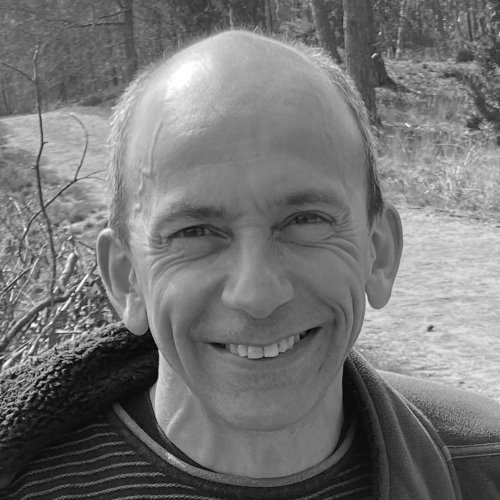
Guy Van Leemput
Guy Van Leemput (1967, Herentals, Belgium) studied mathematics and ceramics. He has been invited several times for an artist-in-residence at the Sanbao Ceramic Art Institute, Jingdezhen, China. His work has been selected for competitions and group exhibitions in his own country and in other European countries, as well as in Japan, China and Australia. At the MINO International Ceramics Competition 2014, his work “Big Anas” won the Bronze Award, it is now in the collection of the Museum of Modern Ceramic Art, Gifu, Japan. Guy was chosen as one of the Ceramics Monthly Emerging Artists 2020. In 2021 he was ‘recommended’ by the Michelangelo Foundation as ‘Master Artisan’. In 2022 he was a key speaker at ‘The Ceramics Congress, Australia’.
The 20-hour workshop lasts from 9.00 to 17.00 on Friday and Saturday and from 9.00 to 16.00 on Sunday.
Included in the Workshop cost:
20 hours of teaching | all the necessary materials | firings | nr. 3 breakfasts
Teacher: Guy Van Leemput
Languages: English, Italian
Download the full program in pdf
To confirm your inscription you have to make a bank transfer of a deposit or the total amount.
Richiesta informazioni
Related products
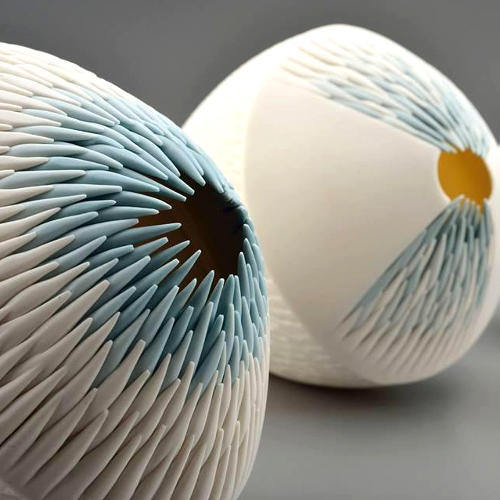
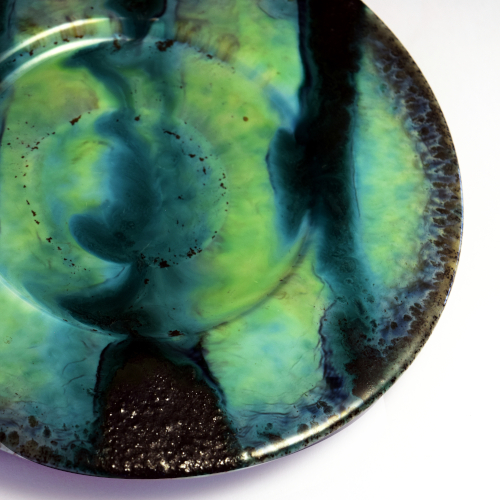
Discovering Porcelain
Basic Course of slip and body porcelain and its transparency
PORCELAIN is a material that requires a prolonged, precise and very accurate processing to obtain pieces of exquisite beauty. The different techniques faced with this material allow us to highlight two important qualities, TRANSPARENCY and SMOTHY to the touch.
This course allows you to develop simple basic techniques, all tricks to avoid cracks, breakages, deformations, the secrets to recover a broken piece, the knowledge of the correct drying and the different firing curves.
We would use body and slip porcelain with and without the use of single and double-fired molds. The purpose is to ENHANCE CREATIVITY WITH THE RIGHT KNOWLEDGE OF ALL RESOURCES IN THE FIELD OF PORCELAIN AND ITS QUALITY OF TRANSPARENCY AND WITHOUT GOING CRAZY!
Program: - Fully practical lessons with a theoretical chapter for basic technology: - Preparation of the slip and body porcelain recipe and percentages. - Slip casting porcelain methods with and without molds - Methods of achieving transparency - Method of constructions with slabs or small fragments - Precautions in drying, firing and finishing - How to obtain smooth surfaces - How to glaze with simple means - How to recover broken or craked pieces - Firing curves and how to place fragile pieces in the kiln, use of alumina - Corrections after biscuit and finishing after last firing The 20-hour workshop lasts from 9.00 to 17.00 on Friday and Saturday and from 9.00 to 16.00 on Sunday. Teacher: Martha Pachon Download the application form in pdf Download the program in pdf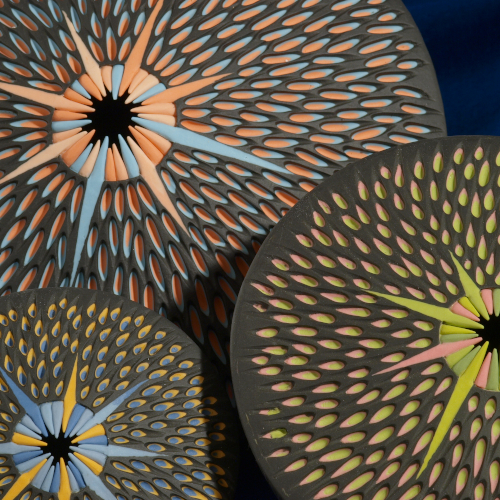
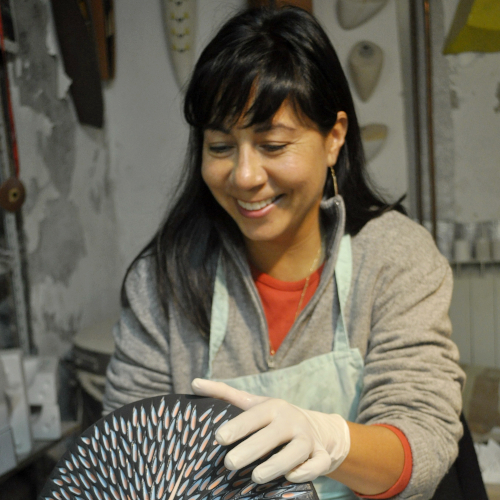
FULL IMMERSION IN THE MULTICOLORED PORCELAIN | Martha Pachon
From Jasper to Nerikomi
One of the finest qualities of porcelain is its sensuality to the touch, plus the surface can be enriched with vibrant colors or sharp contrasts of black and white. There are ancient and complex techniques of the "Neriage" family which, with a modern twist, allow to express, through many aesthetic solutions, from a jewel, a vase, a sculpture, an object, to a complex installation. Among the constructive techniques of colored body porcelain, by hand and with mold will be the contemporary revisiting of: L'Agata, Jasper, Zebra, Nerikomi, Mosaico with composite tiles and Mishima.
To take full advantage of the potential of these techniques, all the possible exercises will be carried out to get to know their strength and refinement. In addition, the realization of all the techniques will be followed by the tricks to avoid problems, breakages or deformations, reaching the maximum of beauty in the colors.
The 20-hour workshop lasts from 9.00 to 17.00 on Friday and Saturday and from 9.00 to 16.00 on Sunday.
Included in the Workshop cost: 20 hours of teaching | all the necessary materials | firings | nr. 3 brunch lunch | a box with the samples of the materials used during the workshopTeacher: Martha Pachon Languages: English, Italian, French, Spanish
Download the full program in pdf
To confirm your inscription you have to make a bank transfer of a deposit or the total amount.

Jewelery in Porcelain
Corso di costruzione di gioielli con le tecniche antiche asiatiche multicolore fino alla sua presentazione finale. Sviluppo ed approfondimento delle tecniche della famiglia del “Neriage” e applicazione in un progetto definitivo per un gioiello. Metodi per preparare gli impasti colorati, processi delle tecniche con metodi di conformazione a stampo, essiccamento, cotture, correzioni di crepe, rotture e deformazione. Montaggio delle diverse alternative e materiali di uso facile e immediato. Agli allievi verranno fornite le parti metalliche e in argento per montare un gioiello completo.
PROGRAMMA: Lezioni totalmente pratiche con un capitolo teorico per tecnologia – riparazione della porcellana ad impasto e barbotine colorate, ricetta e percentuali – creazione dei motivi organici, geometrici o astratti direttamente nello impasto traverso: -Metodi di composizione a blocco, rotolo e forme colorate dell’Arcobaleno – Metodi di costruzione de tasselli composti,uso delle barbotine colorate – Come applicare su stampi evitando crepe e deformazioni – Rifinizione e correzioni dopo cottura biscotto – Metodi di “estivazione” dei pezzi per cottura di alta. Particolarità per evitare deformazioni e rotture -Rifinizione e correzioni dopo ultima cottura.
Cottura (il sabato sera): biscotto, solo dei pezzi realizzati il medesimo giorno ed essiccati, sabato cottura de alta 1250°C, quelli della domenica non saranno cotti, ma è sufficiente per capire la tecnica. Nota: i materiali utilizzati per infornare i pezzi sono soltanto per dimostrazione e cottura Il corso di 14 ore inizia alle ore 9.00 del sabato e termina alle ore 16.00 della domenica. Docente: Martha Pachon
Prehistoric firings
Per chi ama i modi naturali e vede nella ceramica le varietà espressive che questi possono dare. Porterete tre forme essiccate (non cotte) di misura massima singola cm 20 (altezza) x 10 x 10 a spessore max mm7 realizzate in argille bianche da Raku. Le superfici delle forme potranno essere levigate a pressione ma non ingobbiate. Faremo esperienza di applicazione di argille su argille, di smalti in monocottura e di fiammature con cottura a legna che con la sua casualità ci mostrerà giochi infiniti di trasparenze, neri e lustri.
Programma: applicazione sulle vostre forme secche di ingobbi del genere Terra Sigillata, sali metallici, vernici e smalti – cottura notturna a biscotto – allestimento del fuoco e inserimento delle forme – cottura a legna – estrazione delle forme a mezza e fine cottura – lezioni di tecnologia a domanda.
Le forme saranno realizzate seguendo le indicazioni del docente, saranno cotte e consegnate entro i tempi del corso stesso. Il corso di 14 ore inizia alle ore 9.00 del sabato e termina alle ore 16.00 della domenica. Docente: Maestro Giovanni Cimatti
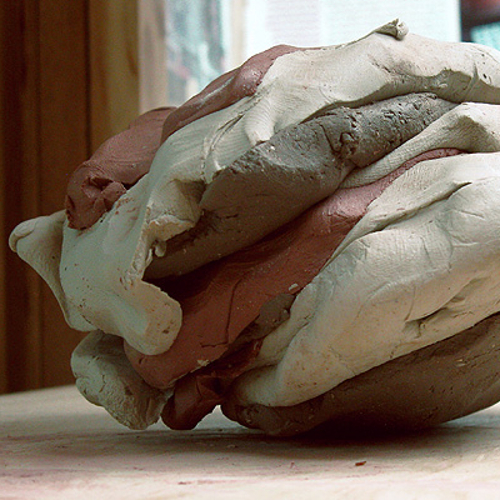
Ceramic maze: the clays
la scelta, le superfici e la cottura delle terre
Fare ceramica è una delle arti più affascinanti, ma occorre avere ben chiare alcune regole e metodologie perchè l’autodidattica è un approccio possibile, ma si può perdere tempo e danaro.
La scelta del tipo di argilla da impiegare nella produzione delle forme è di basilareimportanza e da questa dipendono tutte le altre come la foggiatura, gli smalti e la temperatura ottimale di cottura. Si può scegliere a monte quale metodologia impiegare, ma questo non toglie che la conoscenza delle argille e quindi il loro carattere è assolutamente fondamentale.
Durante il corso avrete l’opportunità di toccare una vasta gamma di argille da cui poter far discendere le vostre scelte future. Il corso si limita quindi alla produzione in libertà di esperienze costruttive, tattili e di cottura sempre sotto la guida del docente.
PROGRAMMA: esercizi personali con vari tipi di argilla con e senza inerti sia per bassa che alta temperatura a colombino, lastra e a stampo – finiture possibili durante le varie fasi di asciugatura – ritiri e plasticità – la deformazione delle forme e il suo controllo – Cottura di alcune esperienze a bassa ad alta temperatura. Lezioni di tecnologia ceramica -dimostrazione di foggiatura a colaggio.
Le forme saranno realizzate seguendo le indicazioni del docente, saranno cotte e consegnate entro i tempi del corso stesso. Il corso di 14 ore inizia alle ore 9.00 del sabato e termina alle ore 16.00 della domenica. Docente: Maestro Giovanni Cimatti
Translucent porcelain
Immediate transparency workshop, slip porcelain without usa of mold and in a single-firing
Transparency is one of the most important qualities of porcelain and usually, requires a prolonged, precise and very accurate processing to obtain a fine beauty piece highlighted by the translucenty. This course allows you to develop two simple and immediate techniques that will facilitate and strengthen creativity to develop many projects without the use of large resources and experience in the field of porcelain techniques. We will use slip porcelain without the use of molds and with a single-firing.
PROGRAM: Totally practical lessons, preparation of the material and basic forms. Use of slip porcelain and construction with two totally different techniques. Surface treatment, controlled drying and finishing. Methods to avoid deformation and breakage during the process and all the special features of the specific firing for this technique. Recover broken complex variations of the techniques and the surface with the use of color introduced into the slip the porcelain. Production of pieces to project in small series for use or decoration. pieces or cracks with specific recipe. Finally, more co. The 14-hour workshop lasts from 9.00 to 17.00 on Saturday and from 9.00 to 16.00 on Sunday. Teacher: Martha Pachon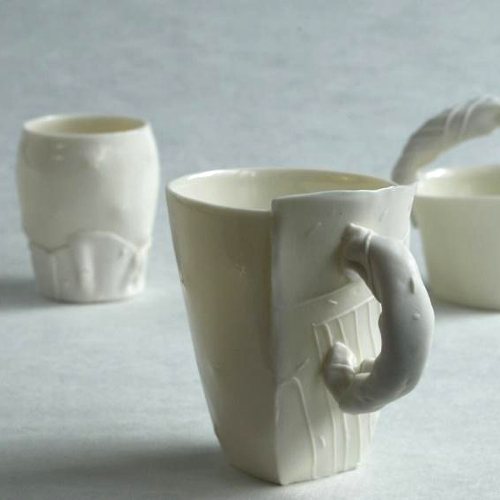
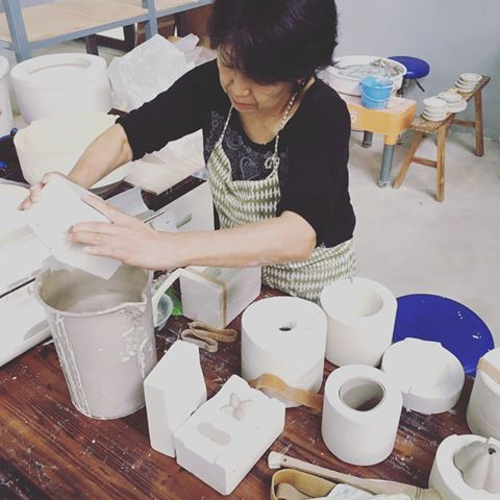
The sophistication of japanese slip porcelain with Kazuko Uga
with slip porcelain and surface treatment. Preparation of slip porcelain, recipes. Ancient technique of Japanese porcelain applied with contemporary methods through the use of slip porcelain slabs. Drying, firing, , glazing, corrections of cracks and deformation.
PROGRAM:
- Fully practical lessons with a theoretical chapter dedicated to the preparation of slip porcelain
- Preparation of slabs with slip porcelain, Japanese style surface intervention
- Methods of slip casting porcelain
- Construction of the pieces
- First firing, glazing, finishing
- Second firing and finishing.
The 20-hour workshop lasts from 9.00 to 17.00 on Friday and Saturday and from 9.00 to 16.00 on Sunday.
Teacher: Kazuko Uga
Translator and assistant: Martha Pachon
Languages: English, Italian, French, Spanish, Japanese
Download the Kazuko Uga CV
Download the application form in pdf
Download the full program in pdf
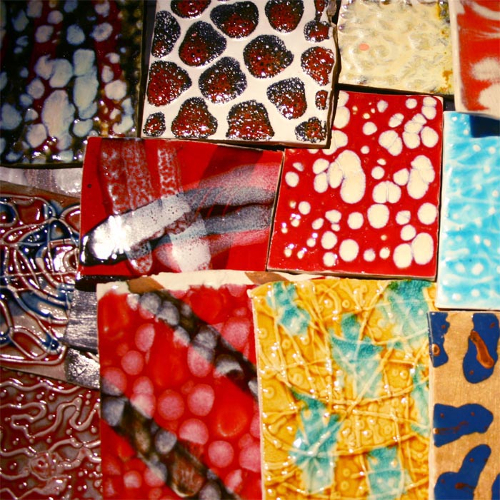

Ceramic maze: the glazes
i rivestimenti, l’applicazione facile, la decorazione e la cottura della ceramica
Il corso si prefigge di informare sui modi e le tecniche che sono alla base del processo ceramico per quanto riguarda la smaltatura e la decorazione a bassa temperatura.
Durante il corso saranno finite esperienze sui vari metodi di smaltatura ponendo particolare attenzione alla smaltatura a pennello con l’ausilio di particolari veicoli che ne consentono la migliore applicazione. Verranno presentate le cause alla base dei principali effetti ottenibili con i rivestimenti che saranno realizzate su supporti in argilla, già cotti, forniti dall’organizzazione: terracotta, terraglia tenera, terracotta di argilla da gres e semirefrattaria da Raku.
Sarà dato spazio anche al rapporto fondamentale degli smalti con i supporti e la loro preventiva miglior cottura a biscotto. Ed infine saranno affrontati anche i difetti che si riscontrano nella smaltatura e a questo proposito è possibile portare eventuali lavori personali finiti sulle cui problematiche sarà possibile svolgere una interessante lezione.
PROGRAMMA: esercizi personali di smaltatura: a pennello, ad aspersione, ad immersione – esercizi di decorazione con i colori sottovernice e i colori soprasmalto – smalti a rilievo – dimostrazione di smaltatura a spruzzo e a secco – Cottura delle prove – a domanda lezioni sulla chimica e tecnologia degli smalti.
Le forme saranno realizzate seguendo le indicazioni del docente, saranno cotte e consegnate entro i tempi del corso stesso. Il corso di 14 ore inizia alle ore 9.00 del sabato e termina alle ore 16.00 della domenica. Docente: Maestro Giovanni Cimatti Scarica il modulo di iscrizione in formato pdf Scarica il volantino in formato pdf