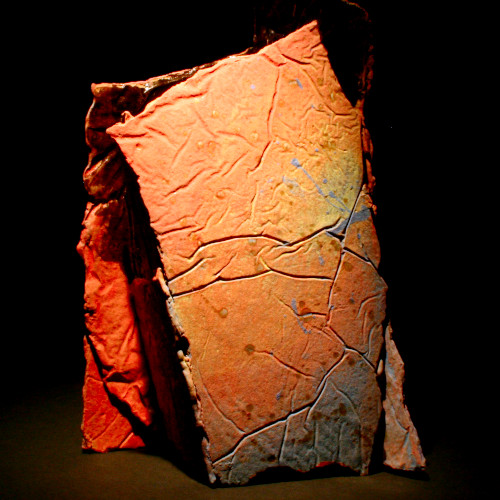
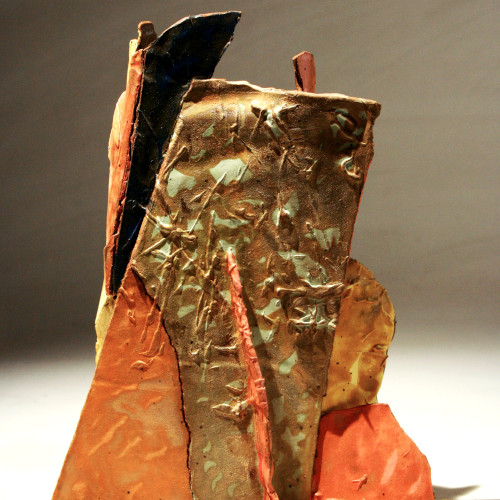
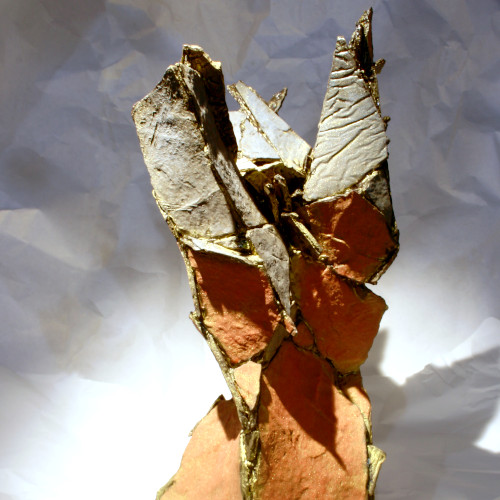
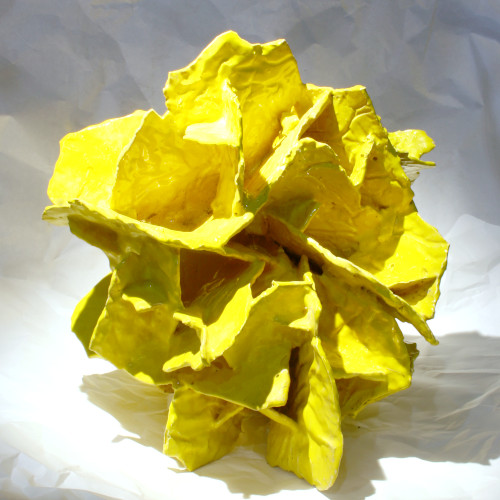
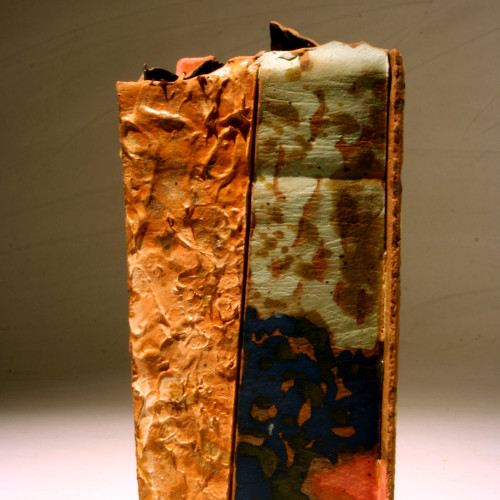
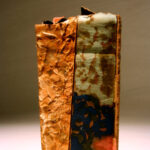
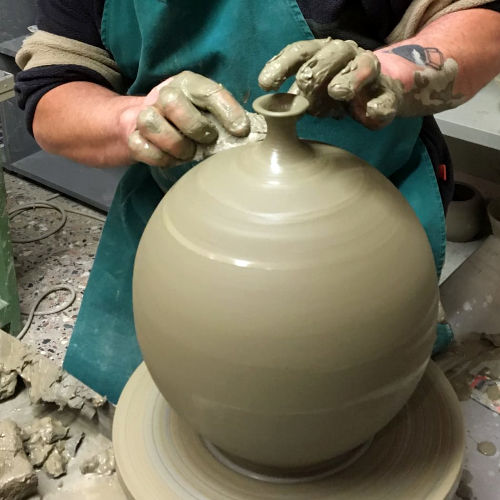
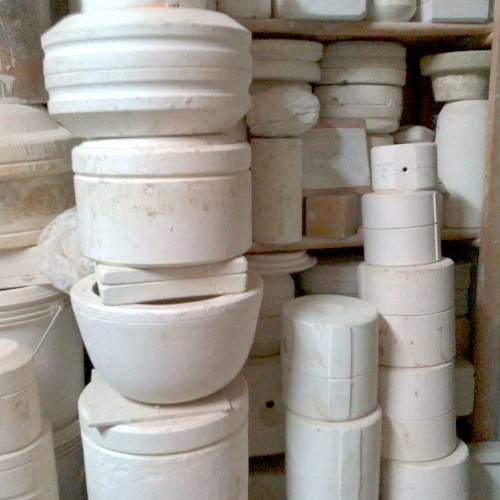
PAPERCLAY NEARLY STONEWARE IN COLOUR | Giovanni Cimatti
15-16 March 2025
Paperclay course developed by Giovanni Cimatti
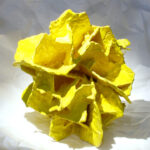
Dry clay, of all types, can find new life in the Paper Clay technique.
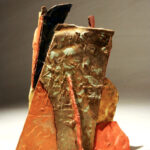
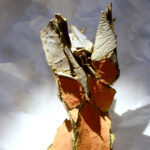
In this course we will investigate how to use, in Paper version, Faenza; the Italian clay par excellence fired until it reaches its maximum hardness. Experiences will be made on how to make forms: by casting with liquid clay mixture in cardboard moulds or with assemblages of dry clay slabs. The forms will then be finished with engobes and crystallines applied on raw and fired once in the so-called single firing.
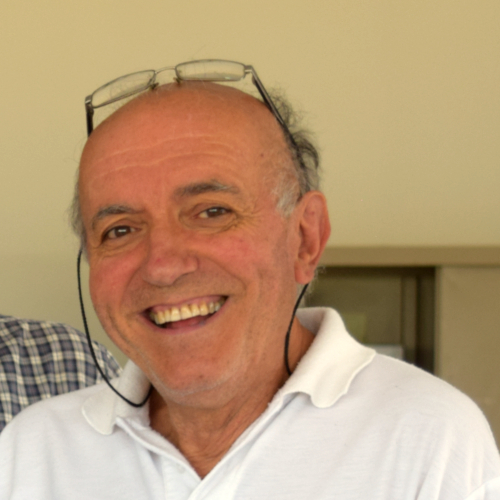
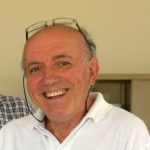
Giovanni Cimatti
Giovanni Cimatti was a teacher at the Art Institute in Siena, director of the ‘T. Minardi’ School of Drawing and Plastic Art in Faenza and teacher at the State Art Institute for Ceramics in Faenza. He began his artistic activity in the 1970s, developing a personal research on the relationship between form and surface by reworking various techniques such as sangam clay decorations, raku, decalcomania, and terra sigillata, and for years he has also been interested in high temperature. He has been invited to important international ceramic art exhibitions, has held solo exhibitions by invitation in Belgium, Japan, Holland, Korea and Switzerland and has participated in cultural exchanges in France, Japan and Germany. He has had solo exhibitions: at the Museum of Contemporary Art at Kyungshung University in Pusan, Korea, at the Ceratekno Gallery in Toki City, Japan, and at the Museo Civico Archeologico in Bergamo.
The 14-hour course starts at 9 a.m. and ends at 5 p.m. on Saturday and starts at 9 a.m. and ends at 4 p.m. on Sunday.
Included in the course:
14 hours of teaching | the materials needed for the course | the firings | 2 breakfasts | a gift box (with samples of the materials used during the course)
Teacher: Giovanni Cimatti
Download the programme in pdf format
To confirm your purchase, you must pay the deposit or the full amount by following the procedure below.
Richiesta informazioni
Related products
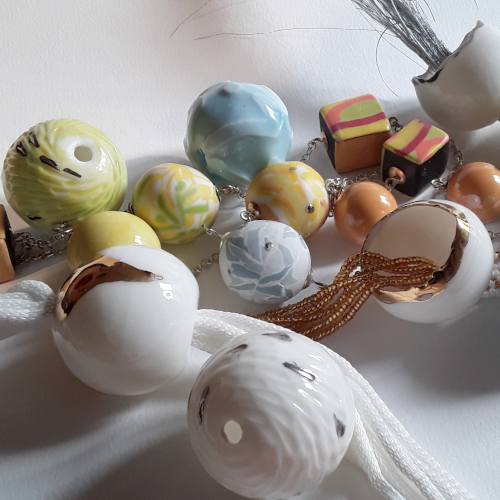
THE PEARL, FROM THE BEGINNING TO THE END | Martha Pachon
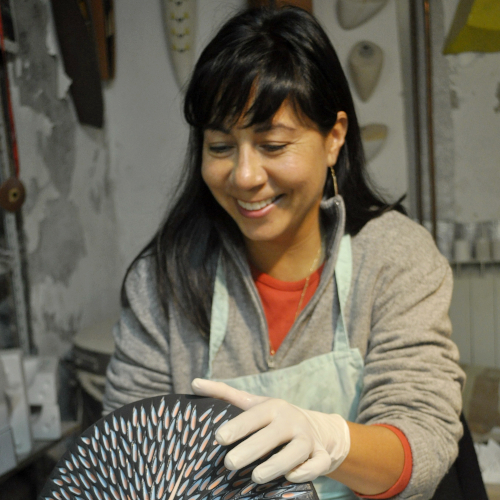
A complex and complete course to make the artist independent of creating large and small series of pearls for jewelery in various shapes, sizes and decorations. Making of molds, testing of slip and body porcelain, firing and decoration. The italian mold expert Florio Bedeschi, will be in charge of the first part of the course for the execution of complex but practical molds for pearls of different shapes and sizes.
A second part related to the use of the mold with the slip and body porcelain, how to firing and diferent kinds of decoration, will be with Martha Pachón Rodríguez.
The 20-hour workshop lasts from 9.00 to 17.00 on Friday and Saturday and from 9.00 to 16.00 on Sunday.
Included in the Workshop cost: 20 hours of teaching | all the necessary materials | firings | nr. 3 brunch lunch | a box with the samples of the materials used during the workshopTeachers: Martha Pachon and Florio Bedeschi Languages: English, Italian, French, Spanish
Download the full program in pdf
To confirm your inscription you have to make a bank transfer of a deposit or the total amount.
FULL IMMERSION IN THE MULTICOLORED PORCELAIN | Martha Pachon
From Jasper to Nerikomi
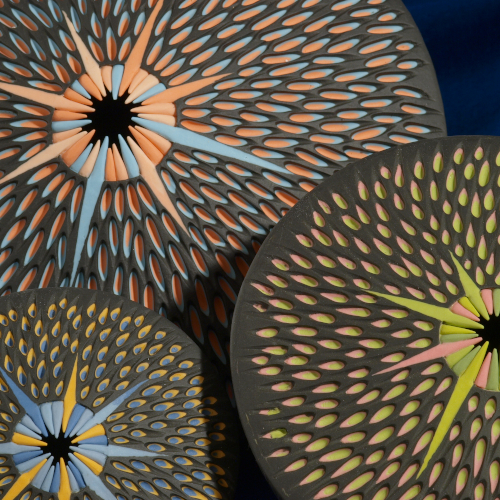
One of the finest qualities of porcelain is its sensuality to the touch, plus the surface can be enriched with vibrant colors or sharp contrasts of black and white. There are ancient and complex techniques of the "Neriage" family which, with a modern twist, allow to express, through many aesthetic solutions, from a jewel, a vase, a sculpture, an object, to a complex installation. Among the constructive techniques of colored body porcelain, by hand and with mold will be the contemporary revisiting of: L'Agata, Jasper, Zebra, Nerikomi, Mosaico with composite tiles and Mishima.
To take full advantage of the potential of these techniques, all the possible exercises will be carried out to get to know their strength and refinement. In addition, the realization of all the techniques will be followed by the tricks to avoid problems, breakages or deformations, reaching the maximum of beauty in the colors.
The 20-hour workshop lasts from 9.00 to 17.00 on Friday and Saturday and from 9.00 to 16.00 on Sunday.
Included in the Workshop cost: 20 hours of teaching | all the necessary materials | firings | nr. 3 brunch lunch | a box with the samples of the materials used during the workshopTeacher: Martha Pachon Languages: English, Italian, French, Spanish
Download the full program in pdf
To confirm your inscription you have to make a bank transfer of a deposit or the total amount.
PIT FIRE | Giovanni Cimatti
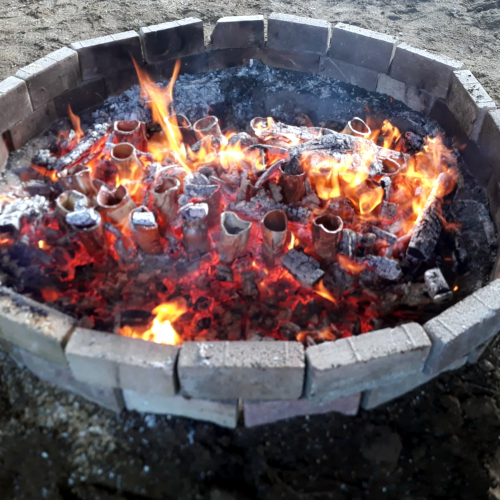
La ceramica affrontata a meta tra primitivo e contemporaneità per indagare nuovi stadi della postmodernità dove non è solo l'opera al centro ma sopratutto il modo con cui la si ottiene. Applicheremo terre sigillate per ottenere superfici lucide da sola argilla senza levigatura e cristalline inattese in questa tecnica.
Arriveranno, dopo la seconda cottura a legna, lagune di nerofumo su fondi bianchi, lustri di rosso rame in riduzione e cavilli anneriti a zona.
Il corso di 14 ore inizia alle ore 9.00 e termina alle ore 17:00 del sabato e inizia alle ore 9:00 e termina alle ore 16.00 della domenica.
Compreso nel corso:14 ore di docenza | i materiali necessari allo svolgimento del corso | le cotture | nr. 2 pasti brunch (colazione e pranzo) | una scatola omaggio (con campionatura dei materiali utilizzati durante il corso)
Docente: Giovanni Cimatti Scarica il programma in formato pdfTo confirm your inscription you have to make a bank transfer of a deposit or the total amount.
THE MAGIC OF COLORS IN TRANSLUCENT PORCELAIN | Martha Pachon
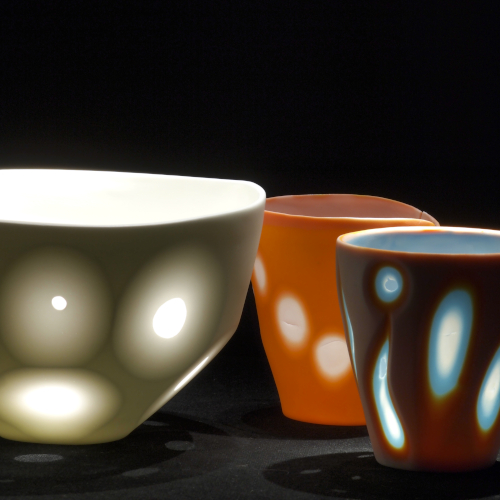
Transparency is one of the most important qualities of porcelain and usually requires a prolonged, precise and very accurate processing to obtain a piece of exquisite beauty highlighted by translucency. The evocative techniques presented in this course will have an important role in the creative process for those who want to build and draw with the light and color in porcelain.
We will use the slip porcelain with and without the use of molds. And above all, the participants will be able to dominate the most important aspects of the porcelain of great thinness: the drying, the impediment of the deformation and the firing.
The 20-hour workshop lasts from 9.00 to 17.00 on Friday and Saturday and from 9.00 to 16.00 on Sunday.
Included in the Workshop cost:20 hours of teaching | all the necessary materials | firings | nr. 3 brunch lunch | a box with the samples of the materials used during the workshop
Teacher: Martha Pachon Languages: English, Italian, French, Spanish
Download the full program in pdf
To confirm your inscription you have to make a bank transfer of a deposit or the total amount.
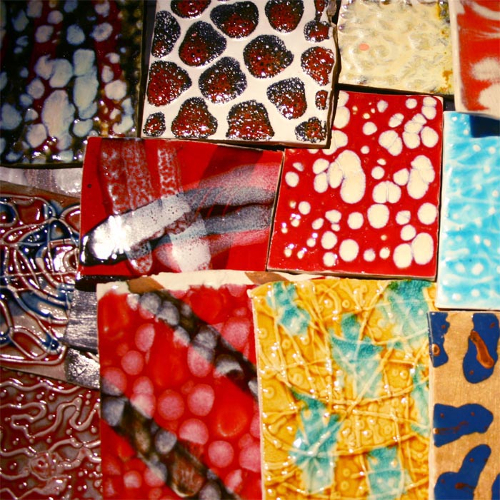

Ceramic maze: the glazes
i rivestimenti, l’applicazione facile, la decorazione e la cottura della ceramica
Il corso si prefigge di informare sui modi e le tecniche che sono alla base del processo ceramico per quanto riguarda la smaltatura e la decorazione a bassa temperatura.
Durante il corso saranno finite esperienze sui vari metodi di smaltatura ponendo particolare attenzione alla smaltatura a pennello con l’ausilio di particolari veicoli che ne consentono la migliore applicazione. Verranno presentate le cause alla base dei principali effetti ottenibili con i rivestimenti che saranno realizzate su supporti in argilla, già cotti, forniti dall’organizzazione: terracotta, terraglia tenera, terracotta di argilla da gres e semirefrattaria da Raku.
Sarà dato spazio anche al rapporto fondamentale degli smalti con i supporti e la loro preventiva miglior cottura a biscotto. Ed infine saranno affrontati anche i difetti che si riscontrano nella smaltatura e a questo proposito è possibile portare eventuali lavori personali finiti sulle cui problematiche sarà possibile svolgere una interessante lezione.
PROGRAMMA: esercizi personali di smaltatura: a pennello, ad aspersione, ad immersione – esercizi di decorazione con i colori sottovernice e i colori soprasmalto – smalti a rilievo – dimostrazione di smaltatura a spruzzo e a secco – Cottura delle prove – a domanda lezioni sulla chimica e tecnologia degli smalti.
Le forme saranno realizzate seguendo le indicazioni del docente, saranno cotte e consegnate entro i tempi del corso stesso. Il corso di 14 ore inizia alle ore 9.00 del sabato e termina alle ore 16.00 della domenica. Docente: Maestro Giovanni Cimatti Scarica il modulo di iscrizione in formato pdf Scarica il volantino in formato pdf
Jewelry in porcelain, Jasper technique
The suggestive technique of Jasper has an important role in the creative processes for those who want to produce objects that are pleasant to the touch, and with a beautiful and vibrant for the perception of color. A complex technique that requires only accuracy in the process and the desire to create designs using color. To make the most of the potential of this technique, the students will perform different exercises to get to know their fragility, strength and refinement applied to the jewels. The whole process and derivations can be applied beyond, in furnishing objects, sculptures, small series of utilitarian or decorative objects.
Progam: - Totally practical lessons with a theoretical chapter dedicated to the artists who used ceramics to create jewels. - Preparation of colored slip and body porcelain, recipe and percentages. Creation of organic, geometric or abstract motifs directly on the body porcelain through: - Jasper decomposition methods. - Methods of construction with small tiles, use of colored slip. - How to apply on jewelry molds avoiding cracks and deformations. - Finishing and corrections after biscuit firing. - Methods of positioning of the pieces for high firing. Special features to avoid deformation and breakage. - Finishing and corrections after last firing. - Design for jewelry composition.Teacher: Martha Pachon
Download the application form in pdf Download the program in pdf
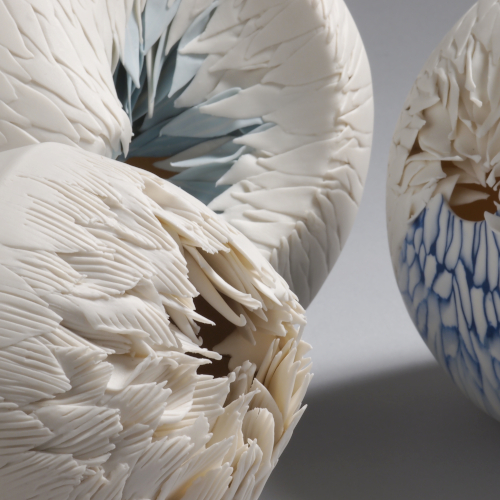
DYNAMIC PORCELAIN | Martha Pachon
Multitechnic Course of Body and Slip Porcelain
Inspired by the new developments of contemporary ceramics, both utilitarian and decorative, sculptural or any application that can be made of this precious material, this course is structured as a laboratory of "multiprocesses" to know and master the basic techniques of slip and body porcelain. Understanding porcelain in a practical, direct, easy and fast way will be the goal of this course. Participants will have at their disposal different techniques, some simple and other complex, with and without the use of molds, with the possibility of glazing also in single firing, with theoretical chapter dedicated in detail to all the questions regarding porcelain: drying, breakage, deformation, firing curves, etc.
THE PARTICIPANTS, BEYOND TO BRING HIS FINISHED WORKS TO HOME, WILL HAVE THE RIGHT KNOWLEDGE OF ALL THE RESOURCES IN THE FIELD OF THE PORCELAIN: ITS QUALITY OF TRANSPARENCY, RESISTANCE, REFINEMENT AND WITHOUT GOING CRAZY!The 20-hour workshop lasts from 9.00 to 17.00 on Friday and Saturday and from 9.00 to 16.00 on Sunday.
Included in the Workshop cost: 20 hours of teaching | all the necessary materials | firings | nr. 3 brunch lunch | a box with the samples of the materials used during the workshopTeacher: Martha Pachon Languages: English, Italian, French, Spanish
Download the full program in pdf
To confirm your inscription you have to make a bank transfer of a deposit or the total amount.
DYNAMIC PORCELAIN | Martha Pachon
Multitechnic Course of Body and Slip Porcelain
Inspired by the new developments of contemporary ceramics, both utilitarian and decorative, sculptural or any application that can be made of this precious material, this course is structured as a laboratory of "multiprocesses" to know and master the basic techniques of slip and body porcelain. Understanding porcelain in a practical, direct, easy and fast way will be the goal of this course. Participants will have at their disposal different techniques, some simple and other complex, with and without the use of molds, with the possibility of glazing also in single firing, with theoretical chapter dedicated in detail to all the questions regarding porcelain: drying, breakage, deformation, firing curves, etc.
THE PARTICIPANTS, BEYOND TO BRING HIS FINISHED WORKS TO HOME, WILL HAVE THE RIGHT KNOWLEDGE OF ALL THE RESOURCES IN THE FIELD OF THE PORCELAIN: ITS QUALITY OF TRANSPARENCY, RESISTANCE, REFINEMENT AND WITHOUT GOING CRAZY!
The 20-hour workshop lasts from 9.00 to 17.00 on Friday and Saturday and from 9.00 to 16.00 on Sunday.
Included in the Workshop cost: 20 hours of teaching | all the necessary materials | firings | nr. 3 brunch lunch | a box with the samples of the materials used during the workshopTeacher: Martha Pachon Languages: English, Italian, French, Spanish
Download the full program in pdfTo confirm your inscription you have to make a bank transfer of a deposit or the total amount.