
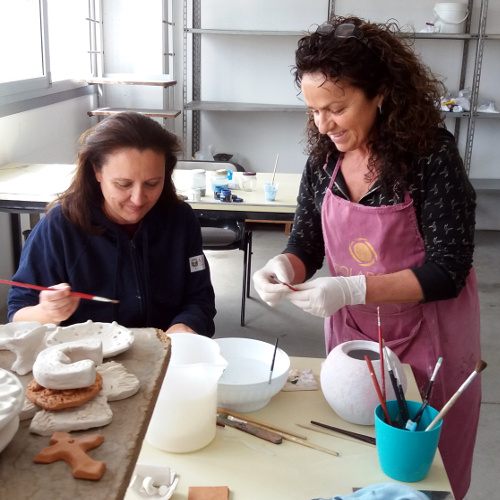
Full immersion in color
03 and 04 September 2018
From Jasper to Nerikomi in porcelain in two days
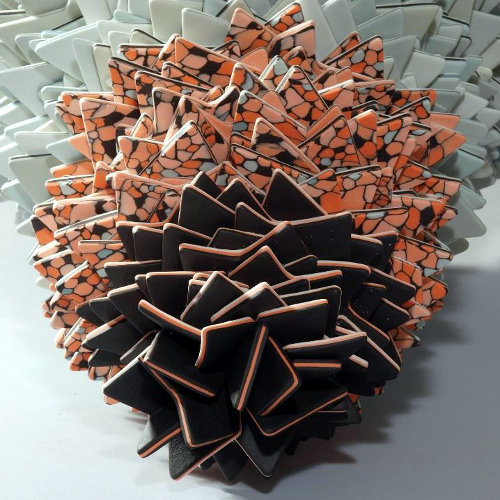
One of the finest qualities of porcelain is its sensuality to the touch, plus the surface can be enriched with vibrant colors or sharp contrasts of black and white. There are ancient and complex techniques of the “Neriage”family which, in a modern way, allow you to express yourself through many aesthetic solutions, from a jewel, avessel, a sculpture, an object, or a complex installation. It will be the very intense and rich post-Argillà course,among the techniques dealt with: the Jasper, the Rainbow or Scala, the Zebra, the Nerikomi and the Mosaico with composite tiles.
PROGRAMMA:
– Preparation of colored porcelain bodies, recipes and percentages and how to avoid the melting or deforming
pieces.
– Use of color both into the body and slip porcelain, tricks.
– Preparation of shapes, cuts, joints, lines, drawings and compositions for all possible ancient Asian techniques
revisited in contemporary way with modern and practical use.
– Agate, Jasper, Mishima, Mosaic, Rainbow, Scala, Zebra and Nerikomi techniques.
– Cleaning and tricks to avoid color contamination, air bubbles, deformations or cracks.
– Preparation of colored slip porcelain and use.
– Conformations with net black and white avoiding contaminations of one color with another.
– With the use of the mold and without, application of the techniques learned.
– How to install the colored pieces inside the kiln avoiding the attachment of the pieces or accidents.
– Types of firing, low and high, firing curves for pieces built by colored mix techniques.
– Finishes and corrections before firing, after first firing and even after the last high temperature firing.
– Recipes and possibility of restoration of broken pieces.
Teacher: Martha Pachon
Languages: English, Italian, French, Spanish
Download the application form in pdf
Download the program in pdf
Richiesta informazioni
Related products
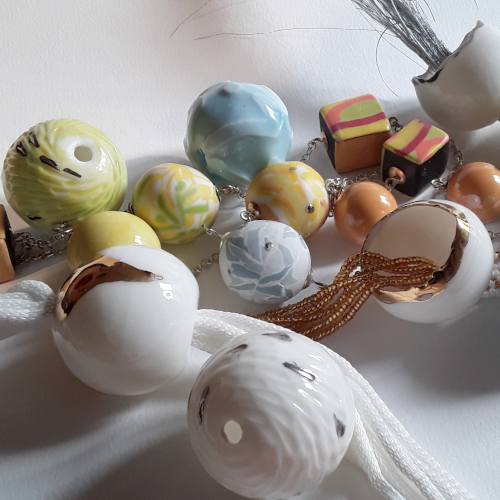
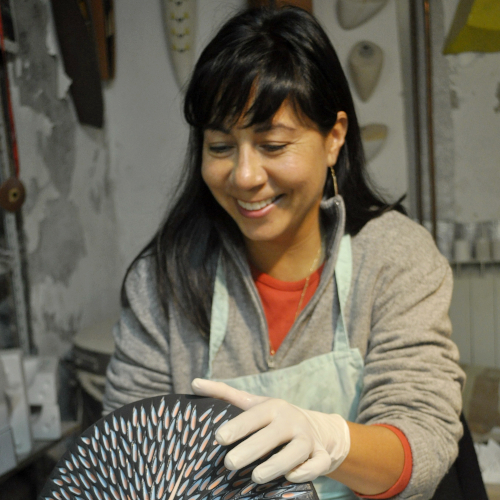
THE PEARL, FROM THE BEGINNING TO THE END | Martha Pachon
A complex and complete course to make the artist independent of creating large and small series of pearls for jewelery in various shapes, sizes and decorations. Making of molds, testing of slip and body porcelain, firing and decoration. The italian mold expert Florio Bedeschi, will be in charge of the first part of the course for the execution of complex but practical molds for pearls of different shapes and sizes.
A second part related to the use of the mold with the slip and body porcelain, how to firing and diferent kinds of decoration, will be with Martha Pachón Rodríguez.
The 20-hour workshop lasts from 9.00 to 17.00 on Friday and Saturday and from 9.00 to 16.00 on Sunday.
Included in the Workshop cost: 20 hours of teaching | all the necessary materials | firings | nr. 3 brunch lunch | a box with the samples of the materials used during the workshopTeachers: Martha Pachon and Florio Bedeschi Languages: English, Italian, French, Spanish
Download the full program in pdf
To confirm your inscription you have to make a bank transfer of a deposit or the total amount.
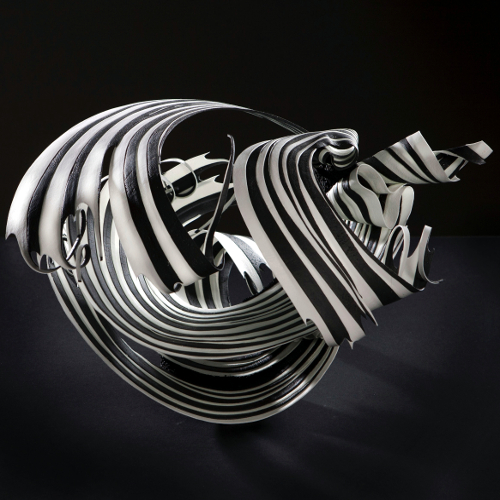
In search of movement with Paula Bastiaansen
A workshop in search of movement, rhythm, the absence of gravity, fragility and transparency. Paula Bastiaansen will show you the use of porcelain so light that this body will become almost immaterial.
PROGRAM: - Conference and presentation of slides. - Demonstration of the working method. - Designing an object starting from a drawing. - Preparation and coloring of porcelain. - Preparation of extremely thin porcelain layers. - Cutting of the shapes and construction starting from the drawing. - Use of inlay and stoneware support in construction. - Drying and firing. The 20-hour workshop lasts from 9.00 to 17.00 on Friday and Saturday and from 9.00 to 16.00 on Sunday.Teacher: Paula Bastiaansen Translator and Assistant: Martha Pachon Languages: English, Italian, French, Spanish, Dutch
Dowload the Paula Bastiaansen CV
Download the application form in pdf Download the full program in pdf
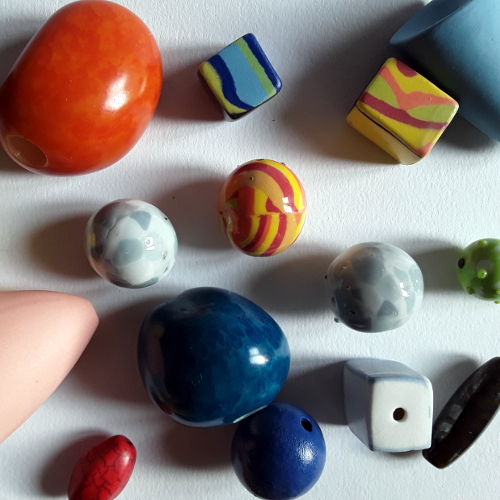
The Pearl, from the beginning to the end
A complex and complete course to make the artist independent of creating large and small series of pearls for jewelery in various shapes, sizes and decorations. Making of molds, testing of slip and body porcelain, firing and decoration.
The italian mold expert Florio Bedeschi will be in charge of the first part of the course for the execution of small molds for pearls of different shapes and sizes.
A second part related to the use of the mold with slip and body porcelain, to the firing and decoration, will be with Martha Pachón Rodríguez.
PROGRAM:
- Fully practical lessons with both teachers. - Preparation of the necessary materials for the construction of the mold. - Preparation of the plaster and its use in the making of the mold, preservation of the mold. - Use of slip and body porcelain with the plaster molds. - Methods of pearl decoration. - How to apply on molds, dry and fire avoiding deformations. - The pieces will be finished, decorated and fired.
Teachers: Martha Pachon and Florio Bedeschi Languages: English, Italian, French, Spanish
Download the application form in pdf Download the program in pdf
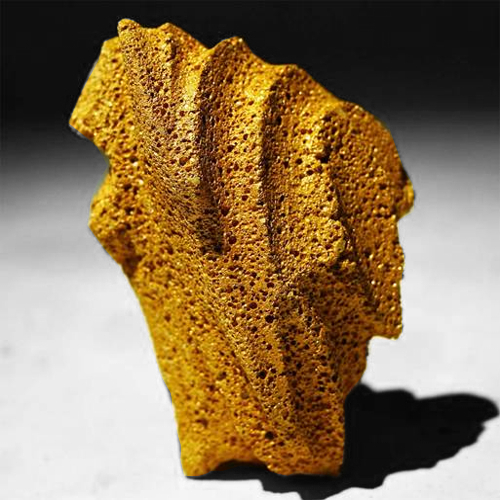

Thousand bubbles
Una delle premesse in campo ceramico, fondamento della didattica e della tecnologia stabilisce che non vi devono essere bolle di aria negli impasti ceramici ma...
E' anche vero che la presenza di bolle e la stessa porosità delle argille favorisce l'isolamento termico, l'essiccazione e la leggerezza. Con impasti a struttura spugnosa si ottengono forme facilmente lavorabili a secco/crudo per mezzo del taglio, incisione o abrasione, una lavorabilità a biscotto simile a quella dell'osso di seppia, durezza inaspettata dopo la cottura finale e il peso vicino a quello dei poliuretani espansi.
Da questa scelta parte la possibilità di creare forme legate in particolare al campo della scultura dove i problemi dello svuotamento delle forme viene superato velocizzando le cotture. Infine e in relazione alla dimensione delle microbolle inserite sarà possibile anche l'applicazione di patine, ingobbi e rivestimenti anche vetrosi.
Programma: metodi di realizzazione di schiume e la loro introduzione nelle argille - colatura della schiuma argillosa - essiccamento - scultura a secco crudo per taglio/incisione - cottura ad alta temperatura in forno elettrico - sfornata - applicazione di rivestimento tipo smalto oro - cottura a media temperatura - lezioni di tecnologia ceramica. Per motivi di tempo e aumentare l'esperienza sulla tecnica saranno forniti ai partecipanti anche alcuni blocchetti di argilla porosa già essiccati.
Il corso di 14 ore dura dalle ore 9.00 alle ore 17:00 del sabato e dalle ore 9:00 alle ore 16.00 della domenica. Docente: Maestro Giovanni Cimatti Scarica il modulo di iscrizione in formato pdf Scarica il volantino in formato pdf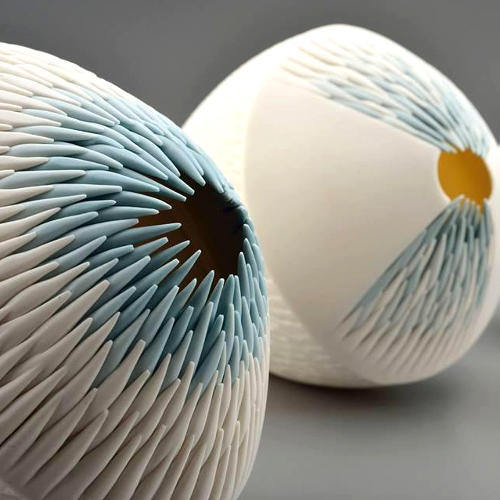
Discovering Porcelain
Basic Course of slip and body porcelain and its transparency
PORCELAIN is a material that requires a prolonged, precise and very accurate processing to obtain pieces of exquisite beauty. The different techniques faced with this material allow us to highlight two important qualities, TRANSPARENCY and SMOTHY to the touch.
This course allows you to develop simple basic techniques, all tricks to avoid cracks, breakages, deformations, the secrets to recover a broken piece, the knowledge of the correct drying and the different firing curves.
We would use body and slip porcelain with and without the use of single and double-fired molds. The purpose is to ENHANCE CREATIVITY WITH THE RIGHT KNOWLEDGE OF ALL RESOURCES IN THE FIELD OF PORCELAIN AND ITS QUALITY OF TRANSPARENCY AND WITHOUT GOING CRAZY!
Program: - Fully practical lessons with a theoretical chapter for basic technology: - Preparation of the slip and body porcelain recipe and percentages. - Slip casting porcelain methods with and without molds - Methods of achieving transparency - Method of constructions with slabs or small fragments - Precautions in drying, firing and finishing - How to obtain smooth surfaces - How to glaze with simple means - How to recover broken or craked pieces - Firing curves and how to place fragile pieces in the kiln, use of alumina - Corrections after biscuit and finishing after last firing The 20-hour workshop lasts from 9.00 to 17.00 on Friday and Saturday and from 9.00 to 16.00 on Sunday. Teacher: Martha Pachon Download the application form in pdf Download the program in pdf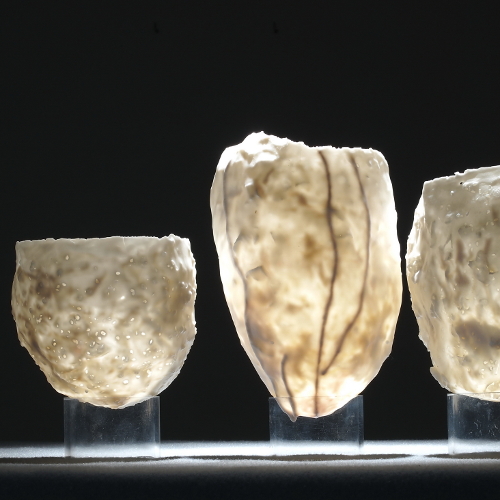
IMMEDIATE TRANSPARENCIES | Martha Pachon
Liquid porcelain without use of the mold and in sigle firing
Transparency is one of the most important qualities of porcelain and usually requires a prolonged, precise and very accurate processing to obtain a piece of fine beauty highlighted by the translucency of the light. This course allows you to develop two simple and immediate techniques that will facilitate and strengthen creativity to develop many projects without the use of large resources and experience in the field of porcelain.
We will use the slip porcelain without the use of molds and single-firing and the two techniques, one for objects with organic shapes and another for objects with geometric shapes and more precise.
The 14-hour workshop lasts from 9.00 to 17.00 on Saturday and from 9.00 to 16.00 on Sunday.
Included in the Workshop cost: 14 hours of teaching | all the necessary materials | firings | nr. 2 brunch lunch | a box with the samples of the materials used during the workshopTeacher: Martha Pachon Languages: English, Italian, French, Spanish
Download the full program in pdf
To confirm your inscription you have to make a bank transfer of a deposit or the total amount.
DYNAMIC PORCELAIN | Martha Pachon
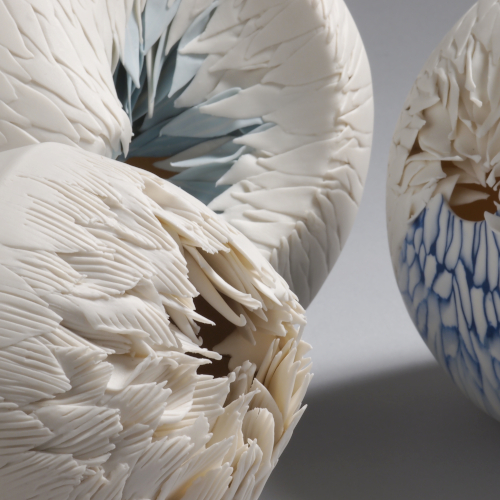
Multitechnic Course of Body and Slip Porcelain
Inspired by the new developments of contemporary ceramics, both utilitarian and decorative, sculptural or any application that can be made of this precious material, this course is structured as a laboratory of "multiprocesses" to know and master the basic techniques of slip and body porcelain. Understanding porcelain in a practical, direct, easy and fast way will be the goal of this course. Participants will have at their disposal different techniques, some simple and other complex, with and without the use of molds, with the possibility of glazing also in single firing, with theoretical chapter dedicated in detail to all the questions regarding porcelain: drying, breakage, deformation, firing curves, etc.
THE PARTICIPANTS, BEYOND TO BRING HIS FINISHED WORKS TO HOME, WILL HAVE THE RIGHT KNOWLEDGE OF ALL THE RESOURCES IN THE FIELD OF THE PORCELAIN: ITS QUALITY OF TRANSPARENCY, RESISTANCE, REFINEMENT AND WITHOUT GOING CRAZY!
The 20-hour workshop lasts from 9.00 to 17.00 on Friday and Saturday and from 9.00 to 16.00 on Sunday.
Included in the Workshop cost: 20 hours of teaching | all the necessary materials | firings | nr. 3 brunch lunch | a box with the samples of the materials used during the workshopTeacher: Martha Pachon Languages: English, Italian, French, Spanish
Download the full program in pdfTo confirm your inscription you have to make a bank transfer of a deposit or the total amount.

A sea of melted glass
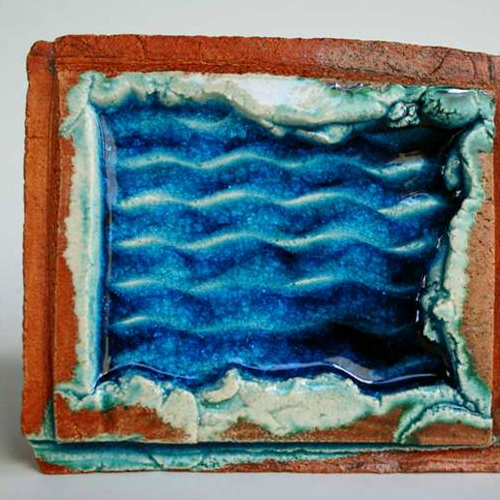
A Faenza, sul finire degli anni 60′, Guerrino Tramonti pratica una tecnica ceramica pittorica denominata “A grosso spessore”. Si tratta di una ceramica che prevede la formazione di uno spessore alto di vetro liquido (cristallina) che allaga entro una superficie piana definita da una bordatura.
Durante il corso saranno fatte esperienze con l’inserimento di smalti, ingobbi, fritte colorate, vetri da vetraria e fili metallici. Saranno impiagate anche le “terre sigillate” che saranno applicate sulle cornici a formare rugginose e brillanti cortecce. Le forme in argilla già biscottata saranno fornite dall’organizzazione.
Programma: Applicazione su biscotto di ingobbi naturali del genere terra sigillata – applicazione al centro delle forme di smalti, vetri in frammenti ecc e copertura di vernice trasparente o colorata in rame con varie tecniche di miscelazione – cottura notturna – descrizione dei prodotti usati – esempio di preparazione di una terra sigillata – nelle foto alcuni esempi di opere realizzate da G. Cimatti
Le forme saranno realizzate seguendo le indicazioni del docente, saranno cotte e consegnate entro i tempi del corso stesso. Il corso di 14 ore inizia alle ore 9.00 del sabato e termina alle ore 16.00 della domenica. Docente: Maestro Giovanni Cimatti