

MAKING MOLDS FOR CERAMICS | Marco Malavolti
29-31 March and 01-02 April 2023
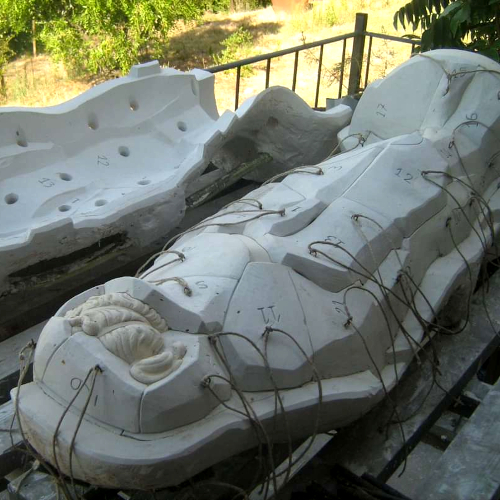
This course will cover plaster moulding | Maximum 4 participants.
Reproducing a shape for large or small productions, but also creating unique objects from a casting or pressure mould, simplifying the working processes; this is the dream of many ceramists.
The trainer Marco Malavolti will present an effective, simple and creative programme for the creation of multi-part casting and pressure moulds. The course will start with an idea and a personal project and will then develop a model which will be analysed before making your own mould.
The course is aimed at a group of a maximum of 4 people and this will give participants the opportunity to develop many of their own personal designs, even large ones.
The 35-hour workshop lasts from 9.00 to 17.00 on Wednesday, Thursday, Friday and Saturday and from 9.00 to 16.00 on Sunday.
Included in the Workshop cost:
35 hours of teaching | all the necessary materials | perfectly equipped studio
Teacher: Marco Malavolti
Download the full program in pdf
To confirm your inscription you have to make a bank transfer of a deposit or the total amount.
Richiesta informazioni
Related products

Jewelery in Porcelain
Corso di costruzione di gioielli con le tecniche antiche asiatiche multicolore fino alla sua presentazione finale. Sviluppo ed approfondimento delle tecniche della famiglia del “Neriage” e applicazione in un progetto definitivo per un gioiello. Metodi per preparare gli impasti colorati, processi delle tecniche con metodi di conformazione a stampo, essiccamento, cotture, correzioni di crepe, rotture e deformazione. Montaggio delle diverse alternative e materiali di uso facile e immediato. Agli allievi verranno fornite le parti metalliche e in argento per montare un gioiello completo.
PROGRAMMA: Lezioni totalmente pratiche con un capitolo teorico per tecnologia – riparazione della porcellana ad impasto e barbotine colorate, ricetta e percentuali – creazione dei motivi organici, geometrici o astratti direttamente nello impasto traverso: -Metodi di composizione a blocco, rotolo e forme colorate dell’Arcobaleno – Metodi di costruzione de tasselli composti,uso delle barbotine colorate – Come applicare su stampi evitando crepe e deformazioni – Rifinizione e correzioni dopo cottura biscotto – Metodi di “estivazione” dei pezzi per cottura di alta. Particolarità per evitare deformazioni e rotture -Rifinizione e correzioni dopo ultima cottura.
Cottura (il sabato sera): biscotto, solo dei pezzi realizzati il medesimo giorno ed essiccati, sabato cottura de alta 1250°C, quelli della domenica non saranno cotti, ma è sufficiente per capire la tecnica. Nota: i materiali utilizzati per infornare i pezzi sono soltanto per dimostrazione e cottura Il corso di 14 ore inizia alle ore 9.00 del sabato e termina alle ore 16.00 della domenica. Docente: Martha Pachon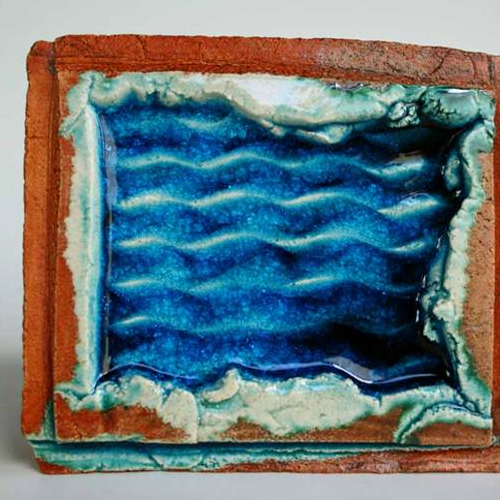

A sea of melted glass
A Faenza, sul finire degli anni 60′, Guerrino Tramonti pratica una tecnica ceramica pittorica denominata “A grosso spessore”. Si tratta di una ceramica che prevede la formazione di uno spessore alto di vetro liquido (cristallina) che allaga entro una superficie piana definita da una bordatura.
Durante il corso saranno fatte esperienze con l’inserimento di smalti, ingobbi, fritte colorate, vetri da vetraria e fili metallici. Saranno impiagate anche le “terre sigillate” che saranno applicate sulle cornici a formare rugginose e brillanti cortecce. Le forme in argilla già biscottata saranno fornite dall’organizzazione.
Programma: Applicazione su biscotto di ingobbi naturali del genere terra sigillata – applicazione al centro delle forme di smalti, vetri in frammenti ecc e copertura di vernice trasparente o colorata in rame con varie tecniche di miscelazione – cottura notturna – descrizione dei prodotti usati – esempio di preparazione di una terra sigillata – nelle foto alcuni esempi di opere realizzate da G. Cimatti
Le forme saranno realizzate seguendo le indicazioni del docente, saranno cotte e consegnate entro i tempi del corso stesso. Il corso di 14 ore inizia alle ore 9.00 del sabato e termina alle ore 16.00 della domenica. Docente: Maestro Giovanni Cimatti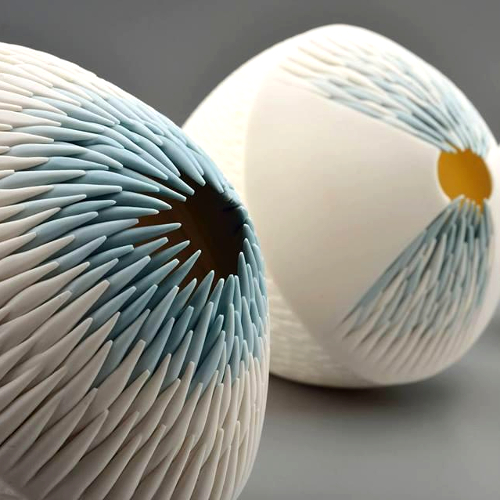
Discovering Porcelain 2
Basic Course of slip and body porcelain and its transparency
PORCELAIN is a material that requires a prolonged, precise and very accurate processing to obtain pieces of exquisite beauty. The different techniques faced with this material allow us to highlight two important qualities, TRANSPARENCY and SMOTHY to the touch.
This course allows you to develop simple basic techniques, all tricks to avoid cracks, breakages, deformations, the secrets to recover a broken piece, the knowledge of the correct drying and the different firing curves.
We would use body and slip porcelain with and without the use of single and double-fired molds. The purpose is to ENHANCE CREATIVITY WITH THE RIGHT KNOWLEDGE OF ALL RESOURCES IN THE FIELD OF PORCELAIN AND ITS QUALITY OF TRANSPARENCY AND WITHOUT GOING CRAZY!
Program: - Fully practical lessons with a theoretical chapter for basic technology: - Preparation of the slip and body porcelain recipe and percentages. - Slip casting porcelain methods with and without molds. - Methods of achieving transparency. - Method of constructions with slabs or small fragments. - Precautions in drying, firing and finishing. - How to obtain smooth surfaces. - How to glaze with simple means. - How to recover broken or craked pieces. - Firing curves and how to place fragile pieces in the kiln, use of alumina. - Corrections after biscuit and finishing after last firing. The 20-hour workshop lasts from 9.00 to 17.00 on Friday and Saturday and from 9.00 to 16.00 on Sunday. Teacher: Martha Pachon Languages: English, Italian, French, Spanish Download the application form in pdf Download the program in pdf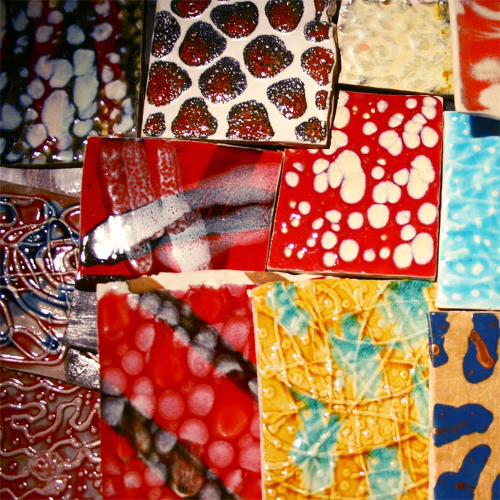

Ceramic maze: the glazes
i rivestimenti, l’applicazione facile, la decorazione e la cottura della ceramica
Il corso si prefigge di informare sui modi e le tecniche che sono alla base del processo ceramico per quanto riguarda la smaltatura e la decorazione a bassa temperatura.
Durante il corso saranno finite esperienze sui vari metodi di smaltatura ponendo particolare attenzione alla smaltatura a pennello con l’ausilio di particolari veicoli che ne consentono la migliore applicazione. Verranno presentate le cause alla base dei principali effetti ottenibili con i rivestimenti che saranno realizzate su supporti in argilla, già cotti, forniti dall’organizzazione: terracotta, terraglia tenera, terracotta di argilla da gres e semirefrattaria da Raku.
Sarà dato spazio anche al rapporto fondamentale degli smalti con i supporti e la loro preventiva miglior cottura a biscotto. Ed infine saranno affrontati anche i difetti che si riscontrano nella smaltatura e a questo proposito è possibile portare eventuali lavori personali finiti sulle cui problematiche sarà possibile svolgere una interessante lezione.
PROGRAMMA: esercizi personali di smaltatura: a pennello, ad aspersione, ad immersione – esercizi di decorazione con i colori sottovernice e i colori soprasmalto – smalti a rilievo – dimostrazione di smaltatura a spruzzo e a secco – Cottura delle prove – a domanda lezioni sulla chimica e tecnologia degli smalti.
Le forme saranno realizzate seguendo le indicazioni del docente, saranno cotte e consegnate entro i tempi del corso stesso. Il corso di 14 ore inizia alle ore 9.00 del sabato e termina alle ore 16.00 della domenica. Docente: Maestro Giovanni Cimatti Scarica il modulo di iscrizione in formato pdf Scarica il volantino in formato pdf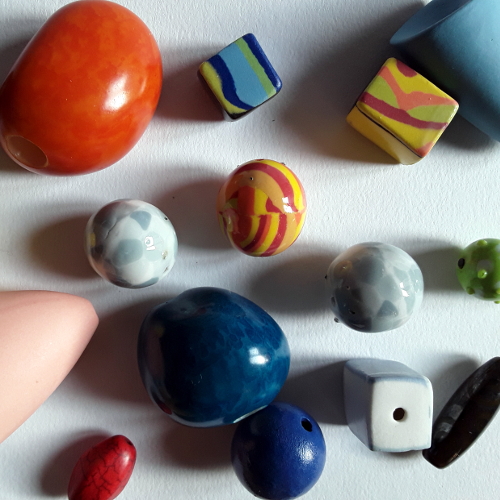
The Pearl, from the beginning to the end
A complex and complete course to make the artist independent of creating large and small series of pearls for jewelery in various shapes, sizes and decorations. Making of molds, testing of slip and body porcelain, firing and decoration.
The italian mold expert Florio Bedeschi will be in charge of the first part of the course for the execution of small molds for pearls of different shapes and sizes.
A second part related to the use of the mold with slip and body porcelain, to the firing and decoration, will be with Martha Pachón Rodríguez.
PROGRAM:
- Fully practical lessons with both teachers. - Preparation of the necessary materials for the construction of the mold. - Preparation of the plaster and its use in the making of the mold, preservation of the mold. - Use of slip and body porcelain with the plaster molds. - Methods of pearl decoration. - How to apply on molds, dry and fire avoiding deformations. - The pieces will be finished, decorated and fired.
Teachers: Martha Pachon and Florio Bedeschi Languages: English, Italian, French, Spanish
Download the application form in pdf Download the program in pdf
DYNAMIC PORCELAIN | Martha Pachon
Multitechnic Course of Body and Slip Porcelain
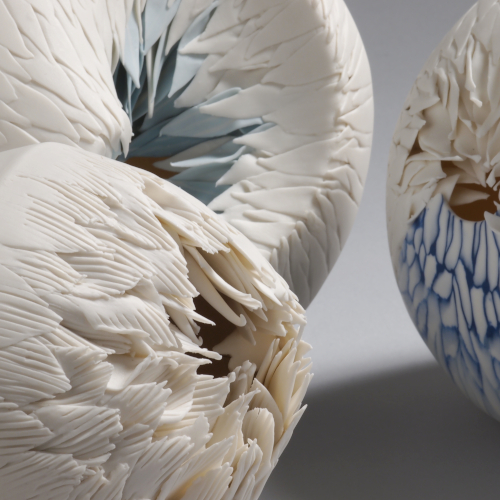
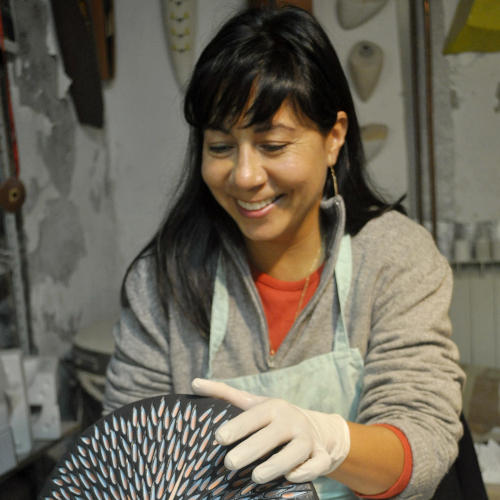
Inspired by the new developments of contemporary ceramics, both utilitarian and decorative, sculptural or any application that can be made of this precious material, this course is structured as a laboratory of "multiprocesses" to know and master the basic techniques of slip and body porcelain. Understanding porcelain in a practical, direct, easy and fast way will be the goal of this course. Participants will have at their disposal different techniques, some simple and other complex, with and without the use of molds, with the possibility of glazing also in single firing, with theoretical chapter dedicated in detail to all the questions regarding porcelain: drying, breakage, deformation, firing curves, etc.
THE PARTICIPANTS, BEYOND TO BRING HIS FINISHED WORKS TO HOME, WILL HAVE THE RIGHT KNOWLEDGE OF ALL THE RESOURCES IN THE FIELD OF THE PORCELAIN: ITS QUALITY OF TRANSPARENCY, RESISTANCE, REFINEMENT AND WITHOUT GOING CRAZY!
The 20-hour workshop lasts from 9.00 to 17.00 on Friday and Saturday and from 9.00 to 16.00 on Sunday.
Included in the Workshop cost: 20 hours of teaching | all the necessary materials | firings | nr. 3 brunch lunch | a box with the samples of the materials used during the workshopTeacher: Martha Pachon Languages: English, Italian, French, Spanish
Download the full program in pdfTo confirm your inscription you have to make a bank transfer of a deposit or the total amount.
The sophistication of japanese slip porcelain with Kazuko Uga
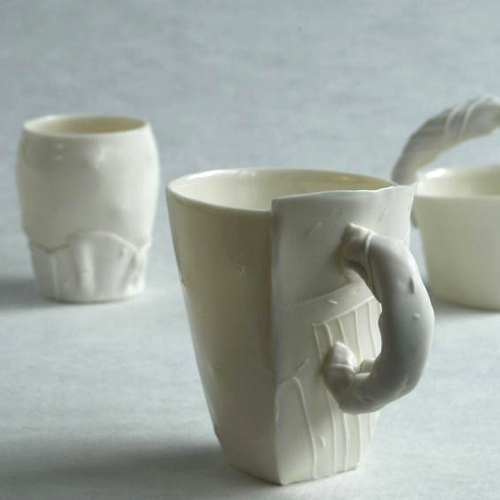
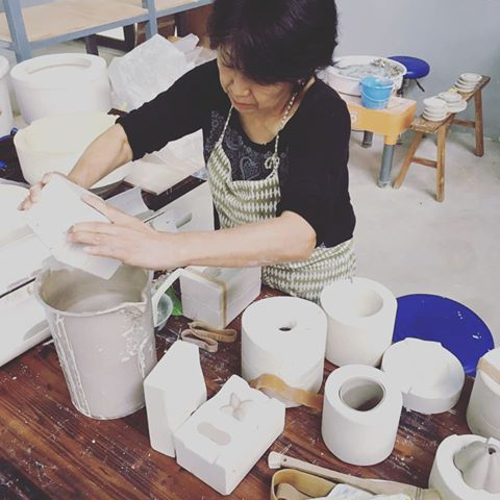
with slip porcelain and surface treatment. Preparation of slip porcelain, recipes. Ancient technique of Japanese porcelain applied with contemporary methods through the use of slip porcelain slabs. Drying, firing, , glazing, corrections of cracks and deformation.
PROGRAM:
- Fully practical lessons with a theoretical chapter dedicated to the preparation of slip porcelain
- Preparation of slabs with slip porcelain, Japanese style surface intervention
- Methods of slip casting porcelain
- Construction of the pieces
- First firing, glazing, finishing
- Second firing and finishing.
The 20-hour workshop lasts from 9.00 to 17.00 on Friday and Saturday and from 9.00 to 16.00 on Sunday.
Teacher: Kazuko Uga
Translator and assistant: Martha Pachon
Languages: English, Italian, French, Spanish, Japanese
Download the Kazuko Uga CV
Download the application form in pdf
Download the full program in pdf

Ceramic maze: the clays
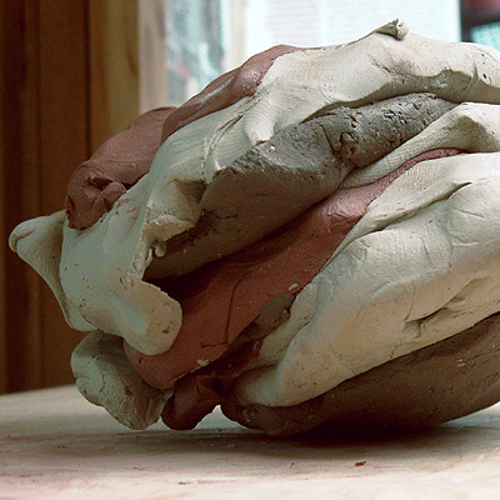
la scelta, le superfici e la cottura delle terre
Fare ceramica è una delle arti più affascinanti, ma occorre avere ben chiare alcune regole e metodologie perchè l’autodidattica è un approccio possibile, ma si può perdere tempo e danaro.
La scelta del tipo di argilla da impiegare nella produzione delle forme è di basilareimportanza e da questa dipendono tutte le altre come la foggiatura, gli smalti e la temperatura ottimale di cottura. Si può scegliere a monte quale metodologia impiegare, ma questo non toglie che la conoscenza delle argille e quindi il loro carattere è assolutamente fondamentale.
Durante il corso avrete l’opportunità di toccare una vasta gamma di argille da cui poter far discendere le vostre scelte future. Il corso si limita quindi alla produzione in libertà di esperienze costruttive, tattili e di cottura sempre sotto la guida del docente.
PROGRAMMA: esercizi personali con vari tipi di argilla con e senza inerti sia per bassa che alta temperatura a colombino, lastra e a stampo – finiture possibili durante le varie fasi di asciugatura – ritiri e plasticità – la deformazione delle forme e il suo controllo – Cottura di alcune esperienze a bassa ad alta temperatura. Lezioni di tecnologia ceramica -dimostrazione di foggiatura a colaggio.
Le forme saranno realizzate seguendo le indicazioni del docente, saranno cotte e consegnate entro i tempi del corso stesso. Il corso di 14 ore inizia alle ore 9.00 del sabato e termina alle ore 16.00 della domenica. Docente: Maestro Giovanni Cimatti